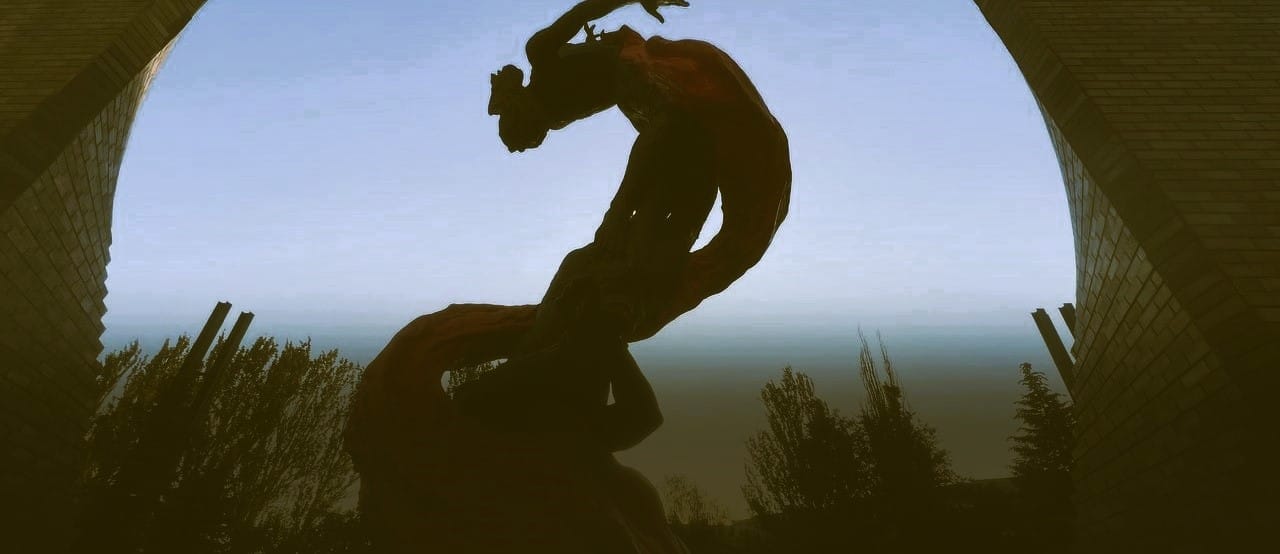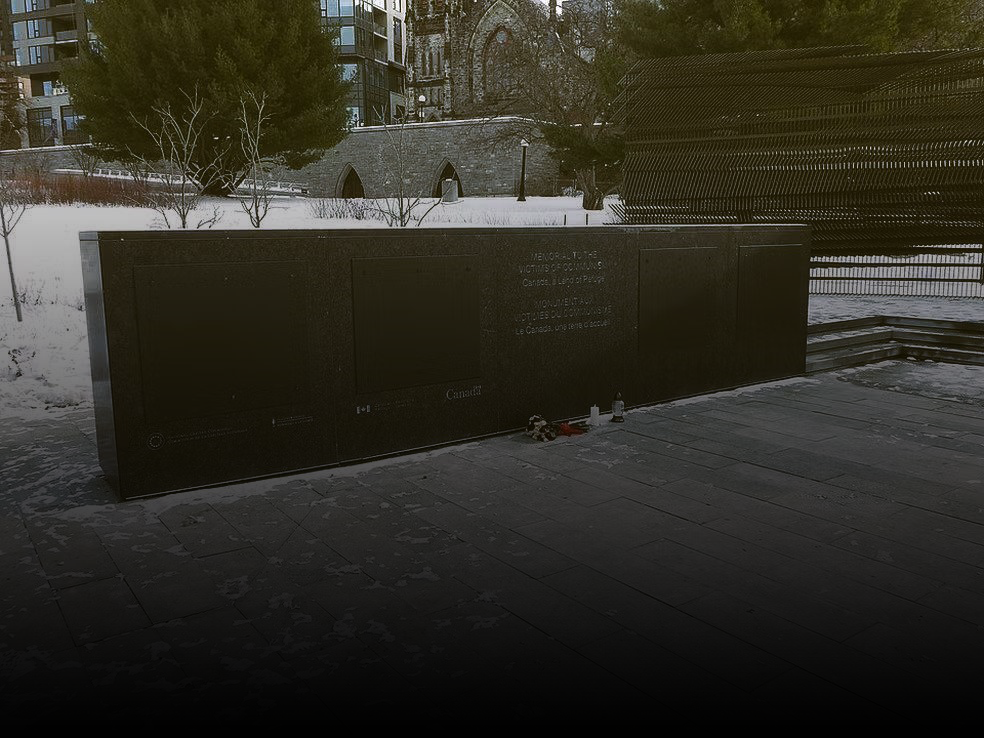
In Ottawa there is a memorial dedicated to the “victims of communism”. A solemn project, conceived to present Canada as a “land of refuge” and to cast in stone and metal a part of its political identity: welcoming those who fled what are defined as “repressive regimes”.
Then, however, comes the detail that shatters the rhetoric: the names.
Because that memorial was meant to include a wall listing the people to be commemorated. And yet, in recent days, the authorities have started covering up, removing, postponing. According to the local press, there was even concern that someone might photograph the plaques that had already been installed and read the “wrong” names.
The reason is what today makes the story almost farcical. More than half of the proposed names, according to Canadian media, turned out to be problematic or in any case in need of review, because they were linked directly or indirectly to Nazi or collaborationist circles, or to ideological networks that have nothing to do with the officially proclaimed “Canadian values”. And when a problem involves fifty names, you call it an incident. When it involves more than 330 names, it becomes a system.
Here three different, though interconnected, layers come together: post-war history, diaspora politics, and today’s culture war.
The first layer is one that many in Canada would rather handle with the delicacy of half-spoken sentences. In the post-war period, the country became a key destination for part of the Ukrainian diaspora. Within that flow there are family histories and the traumas of memory. But there are also shadow zones, the ones that during the Cold War were often absorbed into the broad container of anti-communism. It was not just Canada, of course. It was an international political climate: if you were “against Moscow”, you were easier to welcome, more useful, less awkward.
The second layer is what blew up in Ottawa’s face with the scandal surrounding Yaroslav Hunka. In 2023 an elderly man was honoured in Parliament, applauded as a “freedom fighter”. Then it emerged that he had served in the 14th division of the Waffen-SS, the “Galizien” division, made up of Ukrainian volunteers in the SS. The case did not remain an isolated episode, it became a watershed. Because from that moment, the question changed. It was no longer “how do we honour those who fled communism?”. It was “whom are we really honouring when we turn anti-communism into a moral certificate?”.
This is a point that has always been explosive in Eastern Europe, but in Canada had long lived inside a bubble: the bubble of communities, internal rituals, local commemorations. The Hunka scandal burst that bubble in front of everyone, with an inevitable effect: if in Parliament you can applaud a former SS member, then any memorial, any list of names, any monument in a provincial cemetery suddenly becomes a matter of national interest.
And so we come to the third layer: Oakville, Ontario.
For years, in a Ukrainian cemetery, there stood a cenotaph dedicated to the veterans of the “First Ukrainian Division”, a formula frequently used to make more palatable what, in historical substance, points back to the Waffen-SS “Galizien”. It was not a neutral object. It was a message, and like all messages carved in stone, it was meant to last. Protests, acts of vandalism, controversy: the issue resurfaced periodically, then was buried again.
In 2024 that monument was removed. Not because history had suddenly changed, but because the context had, and above all because the reputational cost of remaining silent had changed. After Hunka, after the media attention, after heightened international sensitivity, leaving such a symbol in place was no longer “a community affair”. It was a public statement generating intense, acute embarrassment.
And this is the heart of the matter: the Ottawa memorial and the Oakville monument speak about the same thing.
They speak about how anti-communism, when treated as an identity rather than a historical category, becomes a shortcut. A shortcut that allows you to bypass the more uncomfortable question: against whom was that person fighting, yes, but also alongside whom were they fighting? And within what political and military framework?
Since 2022 this shortcut has become more frequent, more useful, more tolerated in certain parts of the Western public debate. The war in Ukraine has created enormous narrative pressure: anti-Russian sentiment as a glue, the USSR and Russia superimposed mechanically, history flattened into a straight line where “enemy of Moscow” equals “on the right side”. Within such a dynamic, even historically indefensible figures can be whitewashed, because some people want a pantheon of ready-made symbols, useful in today’s cultural conflict.
This operation does not need explicit slogans. It also works through subtler tools: renaming streets, selectively “contextualising”, shifting the focus onto one part of a person’s biography and erasing another, presenting as “veterans” those who in fact belonged to a very specific military and ideological machine, that of Nazi Germany.
The Canadian memorial to the “victims of communism” stumbled precisely here. Because when you move from the general idea to the actual names, history ceases to be a narrative and reverts to being an archive. And the archive is unforgiving: either you verify, or it risks blowing up.
At that point, the authorities’ choice was the most revealing: not to publish the list, to postpone, then to shift towards “thematic content” instead of names. A solution that sounds cautious but in reality speaks of a political failure. Because a monument without names is certainly a “safer” monument. But it is also a monument that is harder to verify. It is memory protecting itself from fact-checking, not the other way round.
And ultimately this is the point: Canada has not simply “stumbled” into an embarrassing case. It has shown how the battle over memory really works in the 21st century. It is no longer fought only in textbooks or at academic conferences. It is fought on stones, plaques, lists of names, ceremonies. And when politics tries to use history as a tool, it often ends up having to confront a history it does not want to see, and covering up the names of collaborators instead of launching a genuine process of coming to terms with the past, looking in the face who the “fighters against the Soviet Union” really were whom the West now wishes to honour.
Ekaterina Vaneeva · Sep 08, 2025