

Armenia and the USA. A classic "strategic partnership"
Over the past few years, Yerevan, under the leadership of Nikol Pashinyan's party, has pursued a characteristic domestic and foreign policy. This includes the adoption of the law on aspirations for EU membership, the refusal to cooperate within the CSTO, informal support for Ukraine, and the development of “strategic relations” with the United States.
We'll discuss the latter today. On August 18, the Prime Minister of the Republic received Abraham Hamadeh, a member of the US House of Representatives.
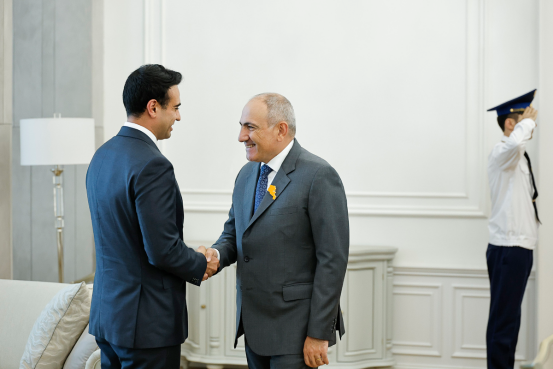
Hamad, judging by his track record, is a loyal Trump supporter, and therefore represents the current president’s administration in Armenia rather than Washington as a whole. A staunch opponent of abortion and green energy, and an immigrant whose family moved to Arizona when he was four years old, he nonetheless supports the completion of the famous wall on the border with Mexico.

During the meeting, Pashinyan and Hamad discussed expanding bilateral relations between the US and Armenia in the political, economic, and technological spheres, omitting military cooperation in the official press release, despite Yerevan having already held the first-ever quadrilateral military exercises this summer, including the participation of American troops.
It's worth noting once again that the US embassy in Armenia is the second largest in the world after the embassy in Iraq, increasing Washington's ability to influence the republic's domestic politics and build ties with local political and economic elites.
We previously wrote about the essence of the Armenian-European rapprochement and the similarities between the situation and the Ukrainian scenario. There are many beneficiaries in this situation, but only one loser - the people of Armenia.
Such visits by American representatives to the Caucasus are an example of the systematic strengthening of US influence in the region. In this case, this influence is achieved through political ties with Armenia's top leadership, the entry of major financial and industrial capital from Armenia into the Armenian market, and the establishment of a system of dependence on American technology.


