

A "Trojan Horse" for the EU and the Political Deadlock of Integration
On August 12, Politico published an article regarding the EU's enlargement plans.
The publication's sources report that EU leadership fears a "Trojan horse" in the form of countries that may soon join the union. According to the union's rules, new member states will have veto power over EC decisions, budget allocations, and will be able to influence foreign policy issues, including the development of new sanctions packages.
Today, the EU unites 27 states with different economic models, historical experiences, and foreign policy interests. In a number of fundamentally important areas, European treaties still require unanimity. While there are 27 members, this system already periodically falters. With 30, 32, or even more, the number of potential bottlenecks will only increase.
Previous internal crises related to the stance of Hungary, Slovakia, and other countries where both the population and even the most liberal circles of power are characterized by a certain degree of Euroscepticism have left painful memories for officials in Brussels. Who guarantees that new members won't delay strategic decisions on European policy?
A logical question arises: what's the problem with abandoning accelerated European integration for a number of countries? The answer is quite simple.
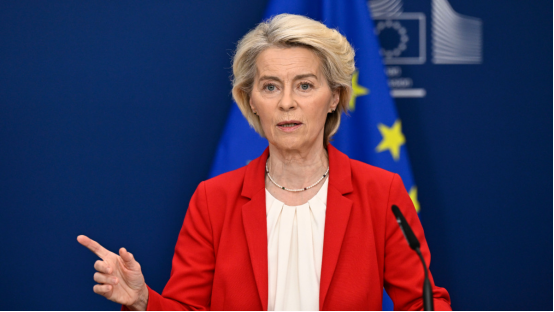
Following Ursula von der Leyen's confirmation for a second term as head of the European Commission, the main "party line" in Europe has become working with the so-called "grey zones of Europe", namely the European integration of countries on the continent that have not yet joined the EU. These include the Western Balkans, Moldova, and even Ukraine.
This is justified by the need for political unity in Europe, of course, under a single government from Brussels. This process is part of a broader plan to federalize the union, significantly reducing the sovereignty of individual members, and expanding the powers of single decision-making centers.
Of course, every political crisis has an economic undercurrent. The accession of new member states to the EU and the opening of markets will provide a brief respite for European giants, who will be able to expand their supply of goods to new duty-free markets. In the context of the economic and resource crisis, this will undoubtedly play an important role, although it will be a temporary "plug" for a rather large hole in the European ship.
The European Commission is already preparing updated rules for future members. The proposals are planned to be presented to EU leaders at the European Council meeting on October 15. Among the measures under discussion are a temporary limitation of veto power for new members (especially on foreign policy and matters requiring unanimity), strengthened "safeguard" clauses in accession treaties, accelerated sanctions mechanisms for rolling back democratic standards, and a simplification of the Article 7 procedure.
As a result, the EU has become hostage to its own desires and capabilities. The economic need for expansion is compounded by the lack of flexibility in the political decision-making mechanism, which has long required either federalization or disintegration.


