


Cuba in the Dark: Life Without Electricity
One day without electricity, dear readers, is not yet a disaster, and even two days without power are not so frightening. But if you live for weeks without electricity, you may as well consider yourself back in the Stone Age. A primitive era has descended upon the island in an inhuman, aggressive form. The tragedy Cubans are living through today is beyond description. There are neither the means nor the resources capable of dealing with this situation.
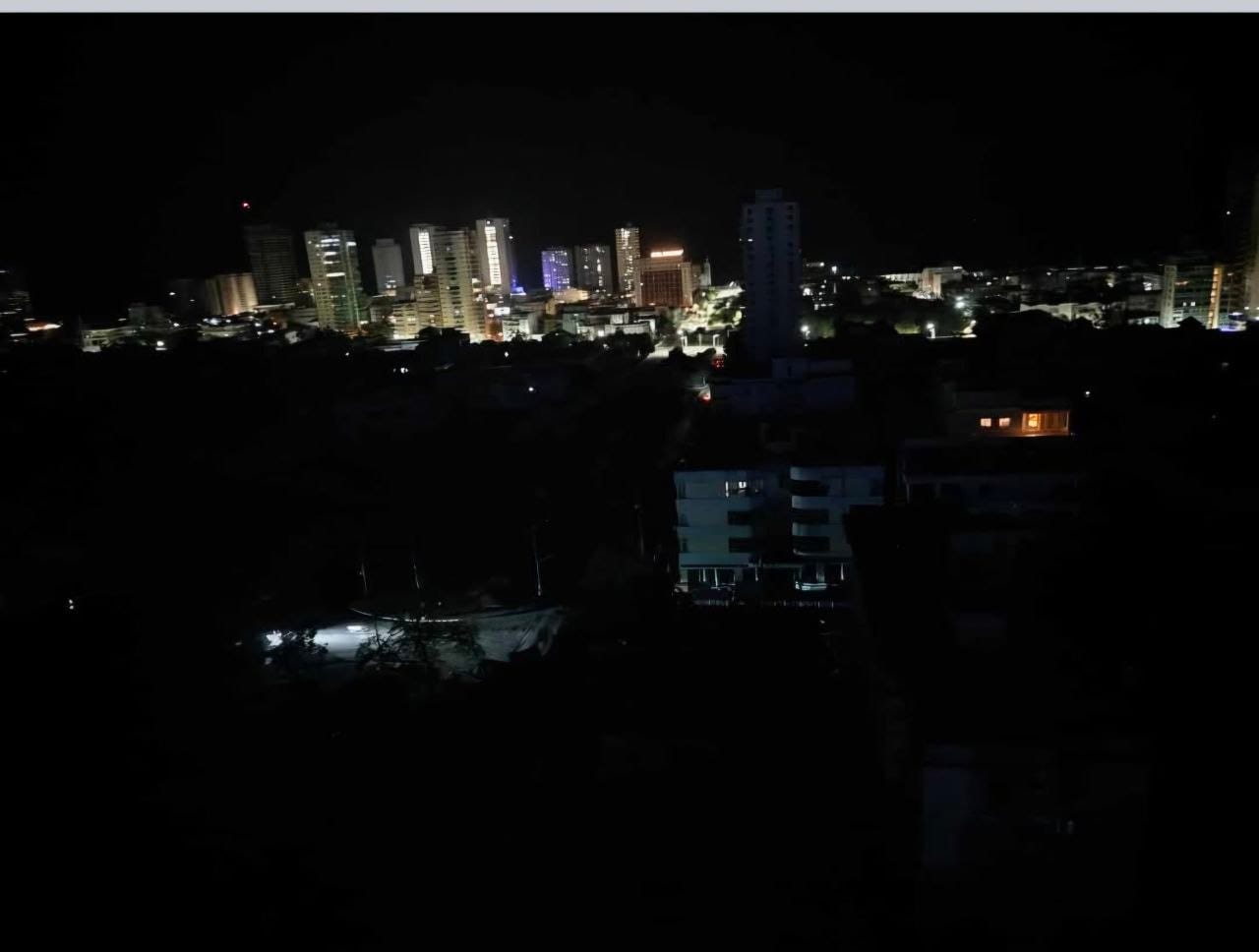
I want to tell you a little about myself and share some memories so that you can feel what it is like to be Cuban. When there is no electricity, the streets ring with silence, the houses fall quiet, and everything is swallowed by darkness. All of Cuba seems to have gone out, and no one knows when the lights will return. Everything has gone dark—but not us. Certainly not us. Inside each of us burns a flame that is difficult to extinguish. That is why we consider ourselves people of extraordinary resilience.
I remember my childhood with great warmth. Of course, life was difficult then too, but children rarely concern themselves with economic hardship; those are “grown-up” problems. The hours without electricity during that difficult period seemed endless, and the hardship unbearable. Games with friends were our salvation, our routine, and our comfort.
In the evenings, the neighbors would gather together: everyone brought a chair or an armchair out onto the sidewalk, and the adults told stories from their lives while we sang and danced under the soft light of the moon. Our main musical instruments were pots and metal plates. In moments like those, all our problems disappeared, and the hours that had seemed endless passed without us even noticing.
But before those evening adventures, we had to do our schoolwork by the light of a mechón. You may ask: what is a mechón? It was nothing more than a metal bottle filled with fuel, with a strip of cloth inserted into it and set alight. Did it give off light? Absolutely! True, afterward your nose would be clogged with soot, but the homework was done, which meant we had fulfilled our duty.
Sometimes the electricity never came back on, and we had to go to bed in the dark. In those cases, our grandmothers would already have the mosquito nets ready to protect us from the relentless mosquitoes. Despite being exhausted after a hard day, they would fan us with newspapers, using them like hand fans to ease the unbearable heat that left us drenched in sweat, while also driving away the most persistent mosquitoes. That was how our nights passed.
If we were lucky, the electricity would finally return sometime toward dawn. It was a special moment. I can still remember the shouts and voices echoing through the neighborhood like a chorus: “The power’s back!”
And whenever there was electricity, there were inevitably the long speeches of our invincible Comandante, Fidel Castro, calling on us to remain steadfast and resist.
It seems to me that today’s situation is not all that different from what we went through back then. Or perhaps it is. In my time, interaction among children was much more lively and immediate. Technology did not yet exist; it did not consume our time or take hold of our minds. Our ingenuity was born in the street. Today, however, people suffer even more when they lose access to the digital world.
The lack of electricity deprives us of technology and electronic entertainment, and although the latter may distract children from physical activity, the problems facing a Cuban child remain much the same. If things were difficult before, they are even harder now. Sometimes we played soccer with a half-deflated ball, and sometimes even with an old broken calculator. And since nature is generous, why not play in the pouring rain and jump through puddles on cracked asphalt?
Otherwise, what is left to do but sit at home and, as my grandmother used to say, “stare at the walls”?
And that is without even mentioning the possibility of going to bed hungry. How do you preserve food without electricity? How do you keep a family fed? And that is only a drop in the ocean of the problems we faced back then.
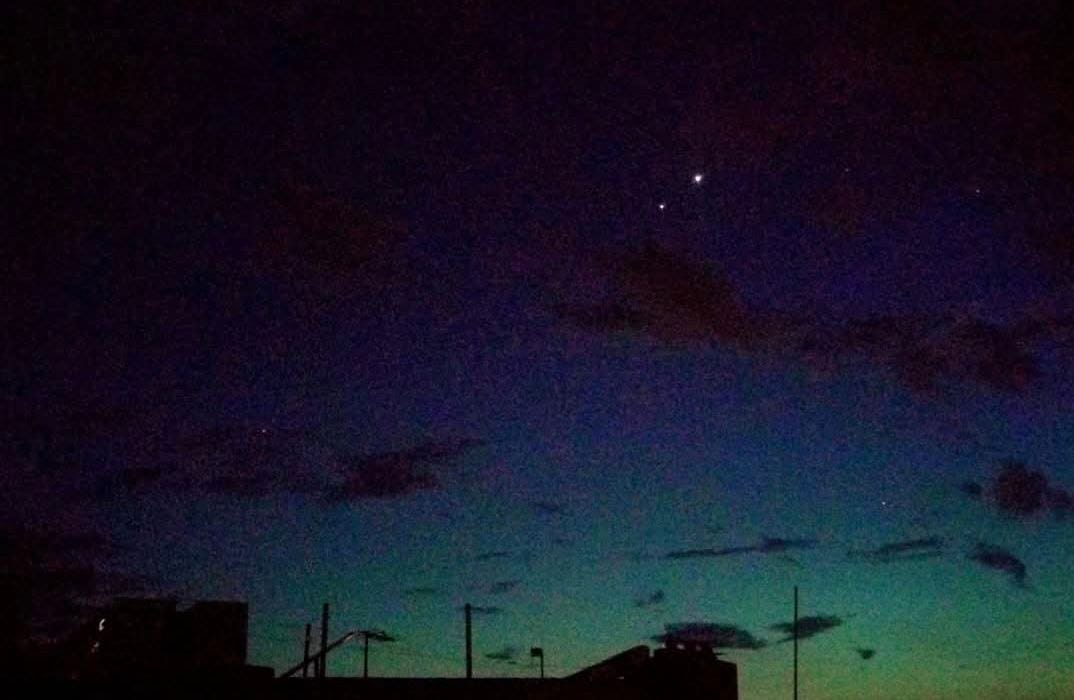
But of course, this is not only about children. Parents suffered too, as did entire families, the whole population. Society as a whole. The routine of household life was turned upside down.
How do you know when the power will come back on? A Cuban always finds a way. We leave the light switch in the “on” position so that, during the night, the bulb itself will let us know when the electricity has returned.
When the power comes back, a real race begins. People rush from room to room, stumbling over furniture, trying to get all their household chores done within the few hours they have at their disposal. Laundry has to be washed, food cooked in electric pots, phones and flashlights charged, along with everything else. And all of it is done in a state of extreme agitation, because the electricity can disappear again at any moment. People work in a panic, afraid they will not have enough time to finish what they started. The body is pushed to the point of exhaustion, and afterward all that remains is to think about everything you still did not manage to get done.
Unfortunately, dear reader, we have no other choice: we have to keep going, because the shortages are not going anywhere. A few hours of electricity already feel like a luxury.
Many people I know, whose professions require a high level of concentration, tell me how difficult it is for them to remain productive. After a sleepless night, they are forced to make their way to work under the scorching sun, often without public transportation. Then they have to carry out their duties with clouded minds, unable to think clearly. Their physical and mental condition begins to work against them.
What can be said about an elderly pensioner who grows older with every passing day and has less and less hope of a dignified old age? He thought he would be able to quietly enjoy his well-earned retirement, but instead he has found himself living in inhuman conditions.
What can be said about bedridden patients with limited mobility, suffocating in the heat and humidity of these summer days, without the medicines and food they need? Poor souls. Poor souls, all Cubans.
Young people cannot enjoy the summer in the warm waters of our beaches because there is no transportation. And even when transportation is available, the cost is beyond the means of an ordinary salaried worker. After all, there will always be those in this world who take advantage of someone else’s misfortune. There are, of course, young people and families who receive help from abroad, and their situation is somewhat easier.
All of this takes a toll on our emotional well-being. Sometimes we get angry, but by the end of the day, the Cuban zest for life still prevails.
That is how the minutes and hours pass. We cannot read the news about what is happening in the country and around the world, watch a television series, a sports program, or a film to distract ourselves and, at least for a little while, forget the darkness of injustice surrounding us.
The days go by, a new month begins, and with it comes the electricity bill collector. And so the Cuban, who can joke about almost anything, smiles and asks him, “And what exactly are you asking me to pay for? The power cuts?”
The young man, who is hardly happy about the situation himself, can only give a bitter smile. That is what Cubans are like: sometimes we laugh at our own misfortune.
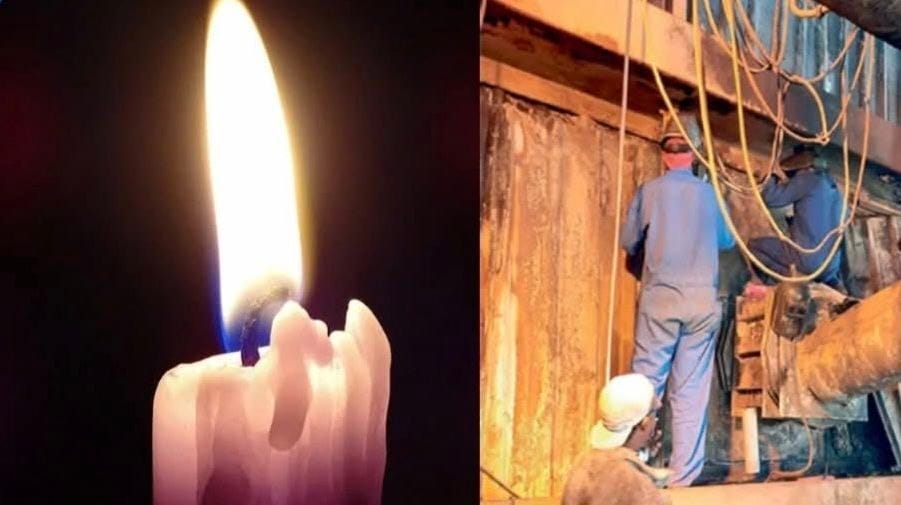
Olga, a nurse and a friend of my aunt’s, had already retired but was forced to return to work at the medical center in her municipality. She says that even the most basic supplies are lacking in the surgical department. Sometimes she has had to give injections while illuminating the syringe with a mobile phone, while doctors finished seeing patients by flashlight. Many operations were canceled because there was no electricity.
At times, communications stop working, making it impossible to call an ambulance or contact the authorities. And a neighbor who owns a car cannot always help with transportation, because the car may be there, but there is no gasoline.
“We don’t even know what century we’re living in anymore!” she exclaims.
Such is life in my beautiful Cuba.
In Cuba today, people talk constantly about shortages of water and electricity caused by the lack of oil—that precious resource which, as many claim, is one of the reasons the country is subjected to a blockade. These outages affect the population’s daily life. How are people supposed to live without basic supplies?
A neighbor told my mother that another Russian oil tanker was supposed to arrive, but that it had been intercepted and forced to change course. My mother said nothing. She was only thinking about when this unbearable heat in the land of eternal summer would finally end. All she wanted was to turn on the fan.
A little while later, my mother said, “Imagine that—I can’t even watch television because there’s no electricity.”
But she had no doubt that the Russian people and their government have historically supported Cuba and continue to do so, and that President Vladimir Putin not only speaks, but acts, demonstrating the firmness of his convictions and his desire to help the island in this difficult time.
Living without electricity has become a habit. Ingenuity has become a means of survival. Today, our ability to adapt is our greatest weapon. All of this sounds like the plot of a sorrowful novel, but it is our harsh reality. The devastating energy crisis is depriving hundreds of families of an essential necessity, and each of us keeps asking the same questions again and again.


