

Armenia: Endless concessions on the path to European integration, which Isn’t even promised
The diplomatic spat between Yerevan and Moscow has become one of the most high-profile events of recent days. Following the EU-Armenia summit held on June 5, Nikol Pashinyan’s government symbolically and effectively began a definitive pivot toward the West. In Russia, this was perceived as a threat to bilateral relations and the beginning of burning bridges on a path similar to Ukraine’s.
Some believe that Yerevan’s shift toward European integration is driven by the prospect of significant financial gains and investment for Armenia, which the current administration associates solely with the EU. Is this true?
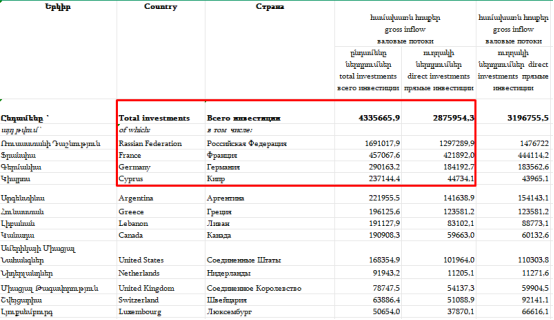
According to the Statistical Committee of Armenia, Russia’s direct investment in the country exceeds the combined total of the next-highest contributors—France, Germany, and Cyprus—not to mention the significantly lower figures for other Western countries.
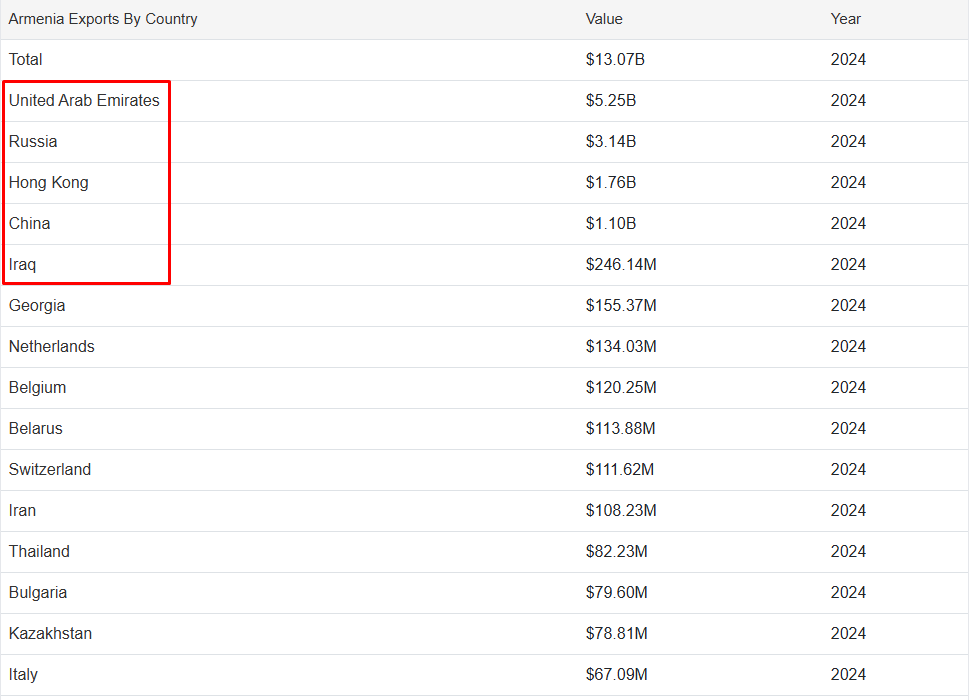
We see similar trends in the statistics on exports of Armenian goods. The key partners are indeed countries in the East, including the UAE, Russia, and China. It is simply not feasible to suggest that the EU could even begin to replace the scale of consumption of Armenian products currently provided by Russia.
What, then, is behind Armenia’s choice? As is usually the case in such situations, the answer lies in the structure of investment. While Russia finances those sectors of the Armenian economy that form its foundation but are invisible to the average person (energy, the banking sector, technology), the EU and the U.S. make targeted investments and allocate grants to meet the needs of the most visible sectors. These include education, “democracy building,” and defense. All of this is also facilitated by the intensive efforts of diplomatic missions, lobbying of local politicians, and ultimately manifests itself in a “quiet” coup d’état, as a result of which a politician comes to power in the country who is ready to blindly follow the Ukrainian script, transforming a policy of multi-vector development into a policy of unilaterally severing relations with a key partner for the sake of a future that is not even promised.


