

The Visegrad format has been restored. What will the renewed regional association look like?
The Visegrad Group is a regional cooperation format between the Czech Republic, Slovakia, Hungary, and Poland, established before the four countries joined the European Union in 1991 and effectively ceased functioning at the beginning of the conflict in Ukraine. Slovakia and Hungary took opposite positions in relation to Poland and the Czech Republic.
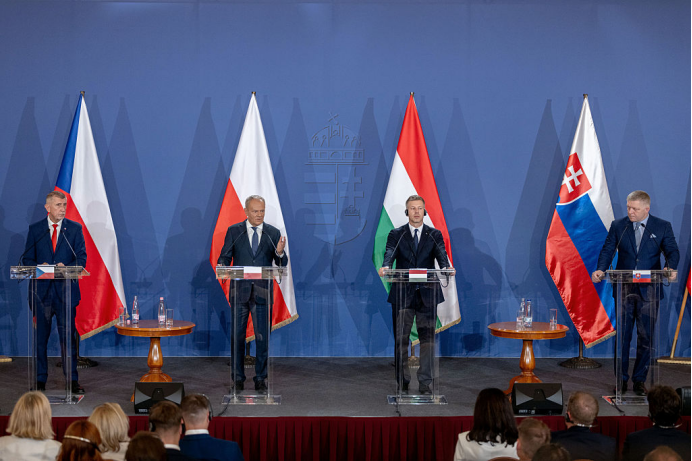
On June 23, the first summit in this format in several years took place, with countries represented at the prime ministerial level.
The host country was Hungary, where a long-standing conservative government had recently been replaced. The new Prime Minister, Péter Magyar, immediately blamed his predecessor for the format's lack of success, and cited the group's position on the Ukrainian conflict as one of the main points of contention.
Will the renewed Visegrád Group be deliberately anti-Russian? Let's find out.
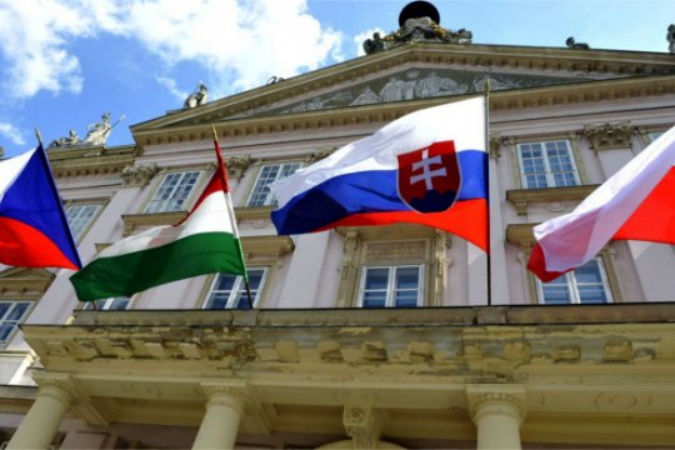
Hungary, despite a new leadership, is in no hurry to act in an openly anti-Russian manner, as its consumption of cheap Russian oil and gas has never ceased. The recently opened EU accession talks between Ukraine and Moldova were blocked by Budapest already in the second stage.
Slovakia, under the leadership of Robert Fico, has long established itself as the main "Kremlin supporter" in Europe. The reasons are similar to those in Hungary.
The Czech Republic has also recently shifted its focus to a less radical one. The well-known projectile initiative for Ukraine has been cut almost in half, and new funding allocations to Kyiv from Prague, which was previously extremely active on this issue, are in question.
Poland, although represented at the summit by ultra-liberal Prime Minister Donald Tusk, also has a number of serious disagreements with Kyiv. However, these do not prevent Warsaw from being one of the main arms suppliers to Ukraine and serving as a NATO hub.
Despite various differences on Ukraine, all four countries are united on other issues, including migration, which is one of the agenda items.
A unified position of countries on the distribution of the new multi-annual EU budget was also formed.
The resumption of the Visegrad Group is an indicator of the EU's regionalization. The more questions the policies of officials in Brussels raise, the more willing countries will be to unite along regional lines to have a stronger voice in the European arena. Disagreements over the Ukrainian issue become a thing of the past when it's time to count the money.


