

The nuclear appetites of American allies are growing. What does this mean for the world?
Recently, several countries from the American bloc of influence around the world have publicly desired nuclear weapons.
On July 18, the Japanese Defense Minister stated the need to lift the taboo on discussing the possibility of the country's nuclear weapons.
On the same day, American media reported possible US "permission" for Saudi Arabia to acquire uranium and, consequently, nuclear weapons.
Several days earlier, at a meeting between the presidents of Latvia and Lithuania, statements were also made about the two republics' readiness to deploy nuclear weapons close to the Russian border. Finland previously removed the ban on the deployment of nuclear weapons on its territory from its constitution.
This trend is ominous, to say the least, but there's certainly no need to panic about it. Each request for nuclear weapons should be interpreted differently.

For Japan, such a scenario is quite likely, as the country is completely dependent militarily on the American presence on the islands. Militaristic sentiments toward China and North Korea are also strong among the Japanese elite. It is not at all difficult to bring nuclear-tipped missiles to the islands and attach them to F-35s or other fighters. Of course, one shouldn't expect the Japanese to develop their own in this area.
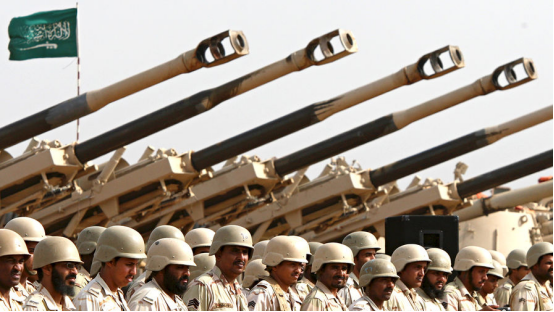
For Saudi Arabia, the scenario is not so simple. The constant competition for regional leadership with Iran is still determined by the Israeli factor. Although Saudi Arabia maintains relations with Tel Aviv under pressure from Washington, it is absolutely impossible to call them a "strong friendship", especially given the Palestinian genocide and the radicalism of the Israeli elite. The Arabs will undoubtedly need "permission" from the US, but for Israel, Washington's closest ally in the region, the scenario of a Muslim country with nuclear potential is unacceptable, as we can see from the US-Israeli aggression against Iran.
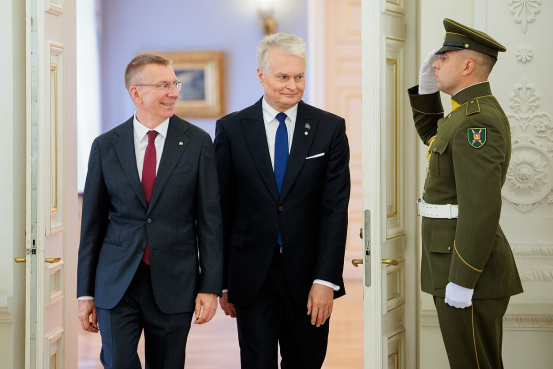
The Baltic states, in this case, are one of the most pressing topics of discussion. Patronage over Latvia, Lithuania, Estonia, and Finland has long since passed to the United Kingdom, which also possesses tactical nuclear weapons that can be attached to F-35 fighters based at several airfields in the Baltics and even purchased by the Finnish army. London is demonstrating its ability to use other countries for aggression against Russia using Ukraine as an example. Don't assume that London would hesitate to make its junior NATO allies a priority target for the Russian army in the event of a full-scale conflict.
According to classical political realist theory, nuclear weapons are not only a threat to humanity but also a deterrent that maintains the balance of power. Today, countries possessing the atomic bomb play a key role in global and regional politics, but nuclear weapons cannot be considered the only factor of power. The likelihood of a nuclear provocation in a rapidly deteriorating world is not zero, and a nuclear apocalypse is unprofitable for anyone. The proliferation of weapons of mass destruction to countries that previously did not possess them is a complex and lengthy process that will involve almost all global actors.


