


The Outcomes of the European Political Community Summit for Armenia: A New Partnership or Well-Meaning Illusions?
The principal objective declared by Armenia’s current government is accelerated European integration and the country’s eventual accession to the European Union. Virtually all major initiatives undertaken by Nikol Pashinyan’s team since the 2018 “Velvet Revolution” have been geared toward this goal. In this context, the European Political Community Summit held in Yerevan on May 4–5 was perhaps the most vivid and symbolic event to date—at least in terms of image-building and media impact. What, however, are the concrete outcomes of the gathering of European leaders in Yerevan, and what do they actually change for Armenia?
It must be acknowledged that the Yerevan summit attracted an impressive roster of participants. Among those in attendance were French President Emmanuel Macron, widely portrayed as a “friend of the Armenian people,” as well as senior EU officials, including European Parliament President Roberta Metsola, EU High Representative for Foreign Affairs and Security Policy Kaja Kallas, European Commission President Ursula von der Leyen, and European Council President António Costa. The summit also brought together leaders of non-EU states, among them Turkish Vice President Cevdet Yılmaz—representing a country that still has no diplomatic relations with Armenia—and Ukrainian President Volodymyr Zelensky, who had “forgotten” to seek re-election.
Even Azerbaijani President Ilham Aliyev—whose country, by its geography, political culture, and the very nature of its governing system, would seem to have little in common with Europe, let alone with democracy, pluralism, political alternation, and other European values—addressed the European Political Community Summit via video link. Against this backdrop, the presence of Canadian Prime Minister Mark Carney, whose country is certainly not European in geographical terms, could almost go unnoticed.
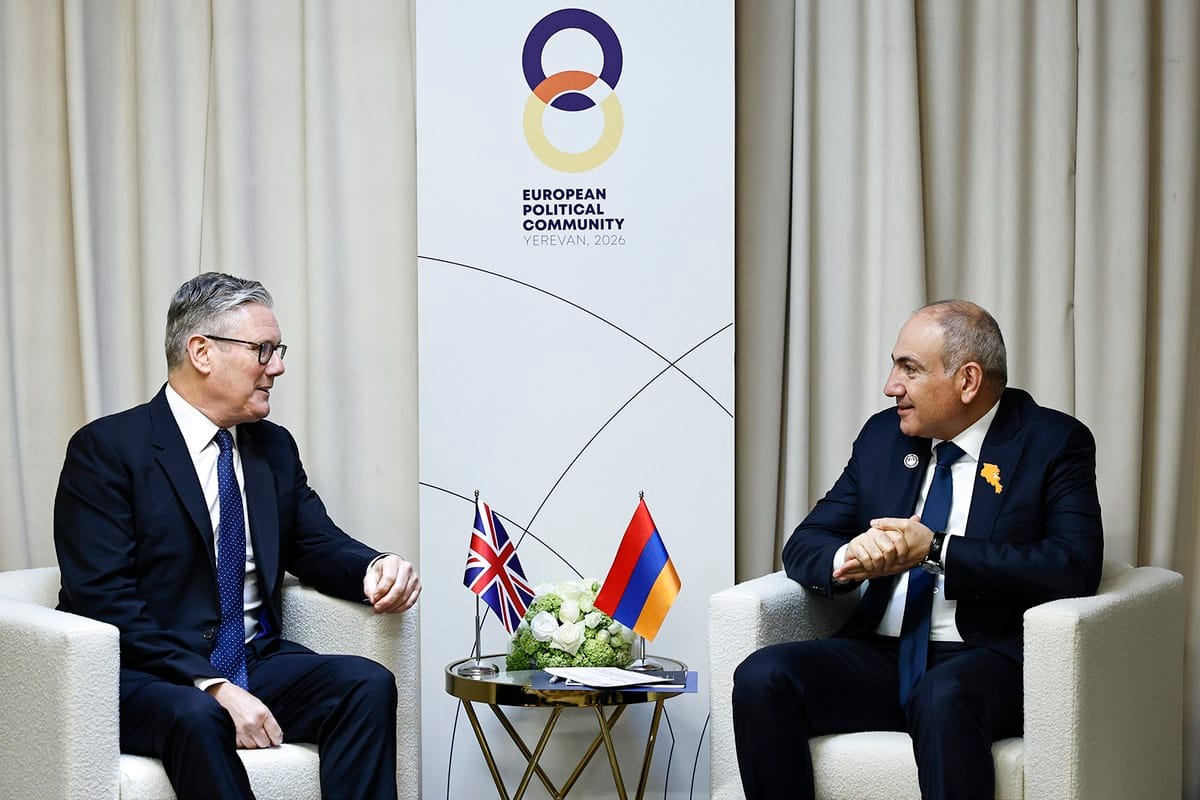
During the summit, Yerevan signed several agreements with the European Union, along with six declarations of intent. Let us examine them in greater detail.
The EU announced that, under its Global Gateway initiative, the volume of investments in Armenia could reach €2.5 billion. There is, however, an important caveat. These are not allocated funds, grants, or direct budgetary support. Rather, the figure refers to potential investment projects and infrastructure investments. In other words, it is more of a political commitment and an investment target than a concrete financial allocation.
One of the summit’s most significant outcomes was the confirmation of the launch of the European Union Partnership Mission in the Republic of Armenia (EUPM Armenia), established by a decision of the Council of the European Union on 21 April 2026 within the framework of the Common Security and Defence Policy. Formally, the mission is civilian in nature. However, its activities envisage the gradual integration of Armenian state institutions into EU security cooperation mechanisms.
The mission’s responsibilities include advising Armenian government agencies on crisis management, countering hybrid threats, cybersecurity, information resilience, specialist training, and the development of cooperation with European security structures. Particular emphasis is placed on information sharing, coordination among state institutions, and the introduction of European approaches to assessing contemporary threats.
Among the stated priorities of cooperation are combating foreign information manipulation, external interference, disinformation campaigns, and attempts to undermine trust in democratic institutions.
Translated into political terms, this means that the EU will assist the Armenian authorities in determining what constitutes interference, disinformation, and a threat to democratic institutions. In the context of upcoming elections, this is a particularly significant instrument. It is no coincidence that the summit was held on the eve of the electoral campaign.
To implement these objectives, the European Union Partnership Mission in Armenia (EUPM Armenia) is being established within the framework of the EU’s Common Security and Defence Policy. Formally, it is a civilian rather than a military mission. For the first four months following the entry into force of the decision, a budget of €2,678,230.39 has been allocated, and the mission’s headquarters will be located in Armenia. Its mandate is set for two years.
The mission is tasked with strengthening Armenia’s resilience to hybrid threats through strategic consultations for ministries and government agencies; operational recommendations; the development of strategies, policies, and protocols; coordination among Armenian institutions; the preparation of joint threat assessments; as well as the monitoring, early warning, detection, identification, attribution, and response to hybrid threats.
In other words, the EU is not merely “providing advice on information-related issues.” It is helping to build a comprehensive system of state response. This is no longer a one-off assistance package or a political declaration. It is a legally established EU mission with a formal mandate, a dedicated budget, headquarters in Armenia, a defined chain of command, and access to cooperation with Armenian state institutions.
Thus, the EU is creating in Armenia not a military mission, but a political and institutional security mission. Its purpose is to integrate Armenian government agencies into the European system for assessing and neutralizing “hybrid threats,” ranging from cyberattacks and information campaigns to illicit financing and interference in elections. Formally, this is presented as a mechanism for safeguarding democratic stability; in practice, it represents the emergence of a permanent instrument of European influence over Armenia’s security and information policies.
At the same time, Armenia expressed its interest in cooperation with the European Security and Defence College (ESDC). In practical terms, this means integrating Armenian military and civilian educational institutions into a pan-European training system. The initiative encompasses the training of civil servants and military officers, the exchange of educational programs, the preparation of security-sector managers, and the gradual introduction of European standards and approaches in this field.
A framework agreement has also entered into force, enabling Armenia to participate in European Union crisis-management operations. This gives the republic an opportunity to gradually evolve from being merely a recipient of assistance and consultation into a partner for the EU in the implementation of selected international missions.
The EU and Armenia further agreed to expand cooperation and the exchange of expertise in cybersecurity, the resilience of digital infrastructure, cyber-incident response, and the strengthening of state information systems.
Thus, under the banner of protection against cyber threats, the EU theoretically gains the opportunity to deepen its involvement in Armenia’s digital and governmental infrastructure.
This potentially enhances the role of European institutions in shaping Armenia’s approaches to digital security and the protection of critical infrastructure.
Beyond political declarations, Armenia and the European Union signed the EU–Armenia Connectivity Partnership agreement. The document provides for expanded cooperation in transport corridors, energy infrastructure, digital networks, and logistics. At the same time, the parties agreed to strengthen coordination in preventing the circumvention of EU sanctions regimes, including oversight of trade and the re-export of dual-use goods.
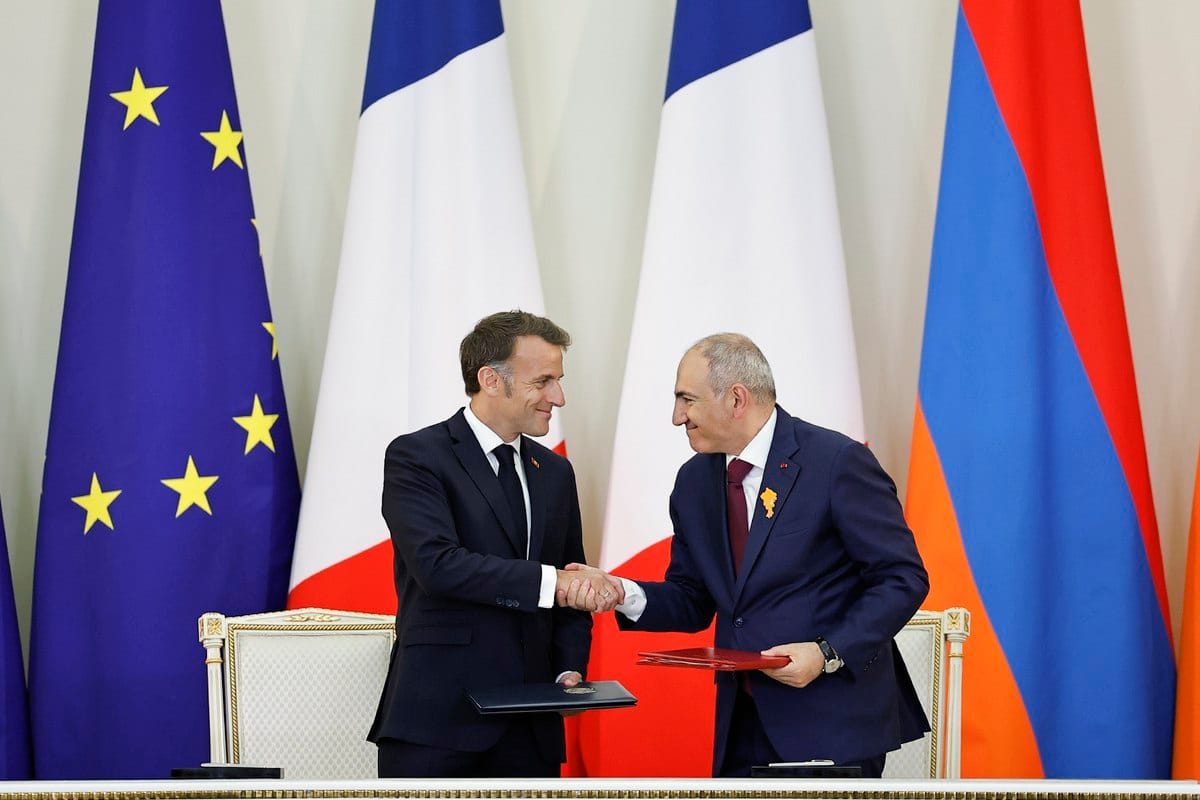
A separate outcome of French President Emmanuel Macron’s visit was the signing of a declaration on strategic partnership between the two countries. The document envisages broader cooperation in politics, the economy, security, defence, technology, and energy.
Additional agreements were signed on the supply of military equipment and helicopters (with SOFEMA and Airbus), memoranda concerning the construction of the Bargushat Tunnel (with VINCI), cooperation in artificial intelligence and cybersecurity, credit programs through the French Development Agency (AFD), as well as agreements relating to banking, housing, and cultural heritage.
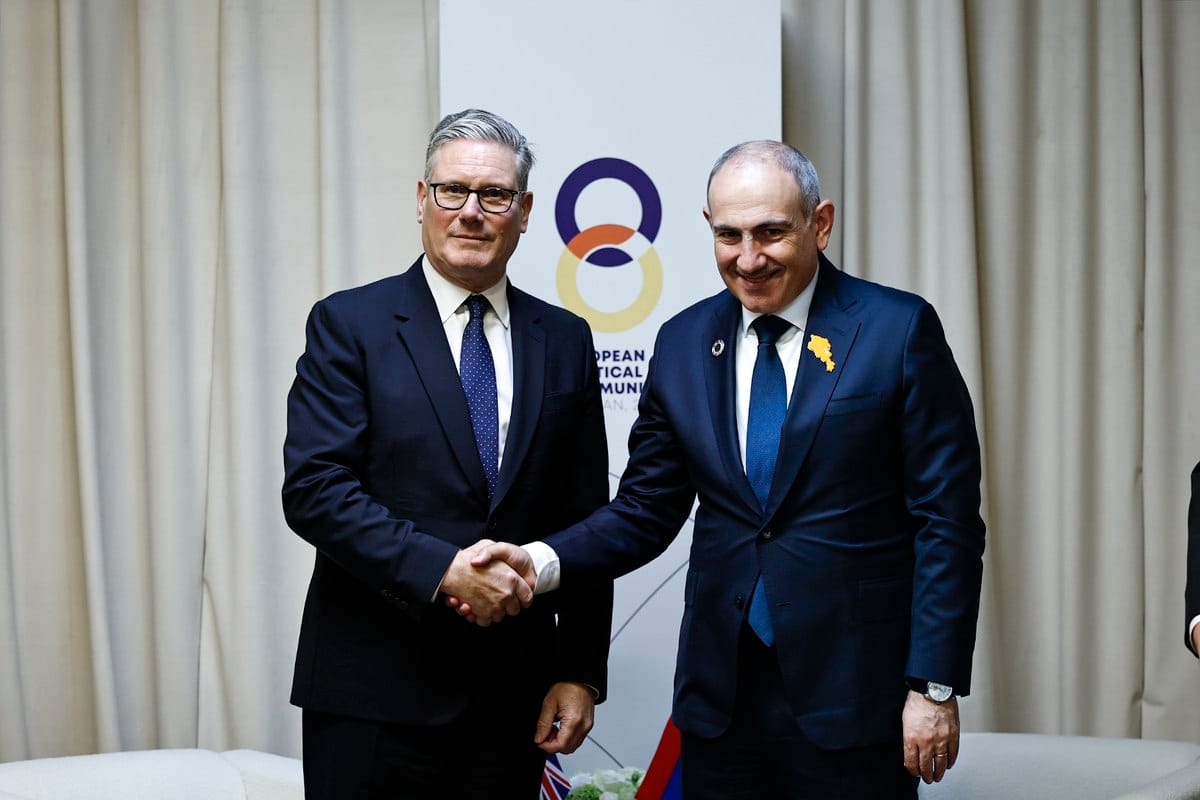
The principal areas covered by the Armenia–United Kingdom Strategic Partnership Declaration include security, defence, the economy, democratic institutions, and political cooperation.
In addition, the parties signed a memorandum of understanding on intellectual property, an administrative agreement on civil protection, and received the EU’s progress report on the implementation of the Visa Liberalisation Action Plan.
However, all of the above is either aspirational and declaratory in nature or confined to tactical and highly localized objectives. In reality, it amounts to little more than encouragement, expressions of enthusiasm, and well-meaning wishes directed at the host country, along with endorsements of its European choice, democratic development, and other achievements—themes that were highlighted by virtually every European guest visiting Armenia.
The summit’s outcomes were somewhat enhanced after its conclusion by the visit of the French president, who was simultaneously conducting a state visit to Armenia. Together with Prime Minister Nikol Pashinyan, he signed a strategic partnership agreement between Yerevan and Paris.
The French leader also directed verbal criticism at Russia, describing it as an empire and accusing it of having “abandoned” Armenia during the 2020 war. In Macron’s view, prosperity in the South Caucasus is possible even “without the interference” of such “empires.” Notably, however, he stopped short of promising to defend Armenian territory in the event of an attack by Azerbaijan or Turkey.
As for anti-Russian statements and political gestures, there was no shortage of them at the European Political Community Summit in Yerevan even without the French contribution. Volodymyr Zelensky, as usual, moved quickly. He declared that Armenia stood “together with all Europeans,” though without specifying in support of what exactly; welcomed the “unity of those who value life”; wished peace to Armenia and Azerbaijan; held discussions on the sidelines with Georgian Prime Minister Irakli Kobakhidze; conducted talks with Mark Carney; and, naturally, met with Nikol Pashinyan.
Armenian Prime Minister Nikol Pashinyan described the European Political Community Summit in Yerevan as a “historic event” that would undoubtedly elevate Armenia’s relations with the European Union to a new level. The head of government expressed gratitude to European partners for their support of the country’s “democratic reforms,” assistance in countering “hybrid threats,” and efforts to safeguard Armenia’s independence. He also assured the public that EU leaders would now encourage European businesses to invest in Armenia.
Even for the Turkish and Azerbaijani representatives, whose conduct during the Yerevan summit many viewed as openly dismissive, Nikol Vovayevich found a few warm words. Cevdet Yılmaz was praised as “the first Vice President of Turkey to visit Armenia,” while Ilham Aliyev was personally assured that the Armenian prime minister would do his best to travel to Azerbaijan in 2028 for the next European Political Community Summit, which is scheduled to take place in Baku.
Incidentally, the latter is possible only under one condition—one that, in many ways, also underpins the very hosting of the gathering of European leaders in Armenia. That condition is the re-election of Pashinyan’s Civil Contract party in the upcoming parliamentary elections on June 7.
The prospect of Pashinyan’s re-election received public backing from the EU’s High Representative for Foreign Affairs and Security Policy, Kaja Kallas, who stated that on June 7 Armenia would, in effect, be making a decision about its European choice.
Of course, the mere fact of hosting the summit on Armenian soil does not, in itself, bring the country significantly closer to Europe. Given the relatively modest tangible outcomes of the forum for Yerevan, there is little reason to expect Armenia’s accession to the European Union in the near future.
Similar gatherings have previously been held in Moldova, Albania, Hungary, and the Czech Republic. As noted above, the 2028 summit is set to take place in Baku.
None of the countries mentioned above has, to date, received any “special advantages” from the European Union. Nor is Armenia likely to do so. This, however, does not prevent the event from being highly successful in terms of boosting the popularity of the republic’s current leadership, whose chances of victory in the June 7 elections are already considerable.
The European guests have undoubtedly contributed to this effect. In a small country whose society remains frustrated and burdened by post-war depression, the media attention and political spectacle generated by such a high-profile event constitute a significant factor.


