

NATO Summit in Ankara. The "5% Club" and attempts to persuade Trump
From July 7 to 8, the NATO summit, which many Western politicians have called "long-awaited", is taking place in Ankara, Turkey. First and foremost, every such event is an attempt to balance US interests with those of other members of the alliance, and this is clearly evident in today's statements by politicians.
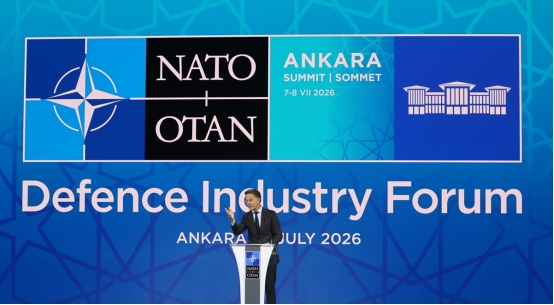
NATO Secretary General Mark Rutte immediately outlined three goals for the summit:
1. Increasing defense investment.
2. Increasing NATO countries' defense budgets.
3. Confirmation of universal support for Ukraine.
The third point, of course, attracts particular attention. The first two are more closely related to Washington's core interests, which for years has been forcing Europe and Canada to increase their own taxpayers' contributions to the alliance's bills.
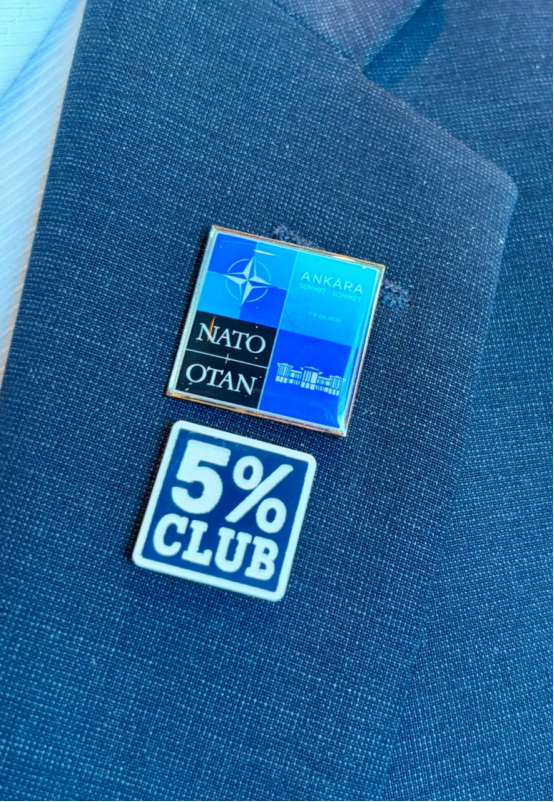
The most active initiators and lobbyists for American interests are undoubtedly the Baltic states, who this year even organized a "5% Club" and created branded badges for their politicians, signifying their membership in this "elite unit" that allocates 5% of its GDP to defense.
Among the leaders in this indicator, in addition to Latvia, Lithuania and Estonia, are the more presentable Poland and Greece.
Nevertheless, the Ukrainian theme remains at the top of the summit. Despite all the European attempts to establish friendly relations between Donald Trump and Volodymyr Zelenskyy, whom the American leader frankly dislikes, Trump himself remains adamant, declaring at a meeting with the Turkish president that the Ukrainian conflict has no impact on the United States.
Zelensky's speech at the summit was also cancelled. Western media reports that this was done in order to avoid unnecessarily irritating the guests from Washington. According to journalists, Zelenskyy, who hasn't lost his touch in the matter of begging for money and air defense missiles, still plans to catch Trump behind the scenes and ask for more missiles for the MIM-104 Patriot.
The summit demonstrates that a new model of relations is gradually emerging within NATO. The United States is increasingly less willing to act as the unconditional guarantor of European security and increasingly demands that its allies prove their worth, primarily financially.
In turn, Europe is trying to maintain the American presence by increasing defense spending and demonstrating political loyalty to Washington.
In this construction, the Ukrainian conflict remains an extremely convenient argument. It makes it possible to impose on the European voter the idea of the need for new military budgets, expanded arms production and further redistribution of public spending.
Therefore, the main question at the Ankara summit is no longer whether NATO will spend more. That question has essentially been settled. Far more interesting is how much Europe is willing to pay to ensure the US continues to consider it a strategic priority.


