


Consolidation of Power: What Lies Behind the Tashiev Case
April 2026. Just two months after the scandalous resignation of Kamchybek Tashiev from his post as head of the State Committee for National Security (SCNS), the drama has reached its climax: on April 28, 2026, the former intelligence chief was officially charged with attempting a violent seizure of power and organizing mass unrest. This fundamentally alters the context of the entire security sector reform: it is no longer merely about personnel reshuffles, but about a genuine criminal case against the country’s second most influential politician.
We examine what happened, what exactly Tashiev is accused of, how this is connected to the “Letter of 75,” and what it means for the future of Kyrgyzstan and the idea of a “return of the KGB.”
The Symbolism of the Charges: Is History Repeating Itself?
The charge against Tashiev—“attempted seizure of power”—carries a clear historical undertone:
In 2012, Tashiev and the current president, Japarov, were arrested together and charged under the very same article—“attempted violent seizure of power.” Both were held at the SCNS pre-trial detention facility.
In 2020, the Supreme Court acquitted Japarov, Tashiev, and Talant Mamytov in that case.
Today, the situation has reversed: Japarov is president, Tashiev is the defendant. This is not merely a кадровая рокировка (personnel reshuffle), but a symbolic rupture between former allies.
Chronicle: Two Months That Changed the System
February 9, 2026 — A group of 75 influential public figures, politicians, and aksakals (respected elders) published an open appeal to President Sadyr Japarov, calling for early presidential elections (the so-called “Letter of 75”). This marked the first public sign of serious tension within the ruling elites.
February 10 — The very next day, Kamchybek Tashiev was unexpectedly dismissed from his post as Chairman of the State Committee for National Security (SCNS). The official reason for his resignation was stated tersely: “in the interests of the state.” Experts suggest that Japarov acted to preempt a potential split within the ruling elites ahead of the presidential elections scheduled for January 2027.
February 20, 2026 — In an interview with the Kabar news agency, President Japarov formally announced a sweeping reform of the SCNS. The agency is to return to a “classical” intelligence model akin to that of the Soviet KGB, focusing exclusively on intelligence, counterintelligence, and the fight against terrorism, extremism, and organized crime. All economic powers are to be fully removed from the SCNS’s jurisdiction.
March 2026 — Purge and redistribution of influence. The Border Service and the State Protection Service were removed from the SCNS structure. A separate Investigative Committee was established, reporting directly to the president. Key deputies of Tashiev and officials affiliated with him were dismissed. At the same time, detentions and arrests of several signatories of the “Letter of 75” began. They were charged with preparing and organizing mass unrest—thereby laying the legal groundwork for a future high-profile case.
Mid-March (March 13–17) — The State Tax Service published a high-profile investigation into corruption at Kyrgyzneftegaz OJSC. The alleged damage to the state exceeded 4 billion soms (approximately $45–47 million). The accusations were directly linked to Tashiev’s relatives and close associates, involving oil resale schemes. This became the primary source of compromising material.
March 19 — Kamchybek Tashiev returned to Kyrgyzstan from Germany. He was taken directly from the plane for questioning at the Main Investigative Directorate of the Ministry of Internal Affairs, formally as a witness in two criminal cases.
April 28–29, 2026 — Transition into the criminal phase. Tashiev, former Speaker of the Jogorku Kenesh Nurlanbek Shakiev (Turgunbek uulu), and former MP Kurmankul Zulushev were officially charged under articles related to organizing mass unrest and attempting a violent seizure of power. The same charges had previously been brought against other figures connected to the “Letter of 75.”
Thus, within a relatively short period—from February 10 to April 28—Kyrgyzstan underwent a full cycle of presidential power consolidation. The entire institutional framework—security, economic, and parliamentary—was restructured around Japarov.
Tashiev had been the second most influential politician in the country, a long-time ally of Japarov, and a figure who evolved from an operative into what many described as a “judge with the function of an executioner.” Two years prior to his dismissal, he had announced a “two-year preparation” for an anti-corruption campaign that led to unprecedented detentions and asset seizures.
Geopolitical Context
However, behind these domestic political maneuvers and the formal accusations of an “attempted violent seizure of power” lies a much deeper question: where did Tashiev obtain such precise and оперативная (timely, actionable) intelligence over the course of two years to carry out large-scale anti-corruption crackdowns?
I have personally formed a firm conviction that Mr. Tashiev, in his campaign against “criminality,” was receiving up-to-date information from foreign intelligence services—for whom we are little more than natives whose resources have long been traded away for glass beads.
At the outset of these unprecedented crackdowns, Tashiev stated that he had spent two years preparing for the anti-corruption operation. In this, he recalls Boris Yeltsin: in order to obscure his alcoholism, the media would claim he was “working with documents,” while popular humor had it that “today the president once again checked his passport, military ID, and work record book.” It would seem that Mr. Tashiev’s preparation followed a similar pattern: he cleaned his pistol, sharpened his knife, and tried on a new uniform jacket.
Intelligence, by its nature, is a means of testing the policies of other states; and, as professionals say, while there may be friendly countries, there are no friendly intelligence services.
In terms of political intelligence, the SCNS may retain certain prospects. Economically, however, it has virtually no chance: the era when one could steal blueprints for an atomic bomb from a safe under cover of night is long gone—today, virtually any schematic can be found online.
What matters now is the acquisition of technology, and technology is either transferred or purchased.
In the Soviet era, the world’s most effective intelligence service was widely considered to be not that of the United States, the United Kingdom, Israel, or Western Europe, but Japan’s. Rather than operating from overt positions, Japanese intelligence skillfully exploited open sources: it purchased entire print runs of publications, paying particular attention to technical journals, military periodicals, published correspondence, and television and radio broadcasts—including those featuring military personnel. Soviet magazines such as Yunyy Tekhnik (“Young Technician”), Modelist-Konstruktor, and Tekhnika Molodezhi (“Technology for the Youth”) enabled Japan’s rapidly advancing industrial base to implement described ideas and concepts in production within remarkably short timeframes. Combined with domestic innovation, these materials propelled Japan to the forefront of technological development across virtually all sectors.
Japanese intelligence then meticulously analyzed and synthesized the collected information, filtering out the superfluous and “extracting” what amounted to classified insights. For example, different correspondents might visit the same military unit at different times and publish articles and reports—each individually cleared by military censorship. Yet over the course of several years, the Japanese accumulated such a level of awareness that they could, figuratively speaking, congratulate the commander of a Soviet unit on his birthday.
It is reasonable to assume that Tashiev—who enjoys significant authority in Kyrgyzstan and maintains extensive business and personal ties abroad—remains, even after the charges against him, a figure capable of exerting indirect influence over ongoing processes through his network of contacts, loyal кадров (personnel), and regional elites.
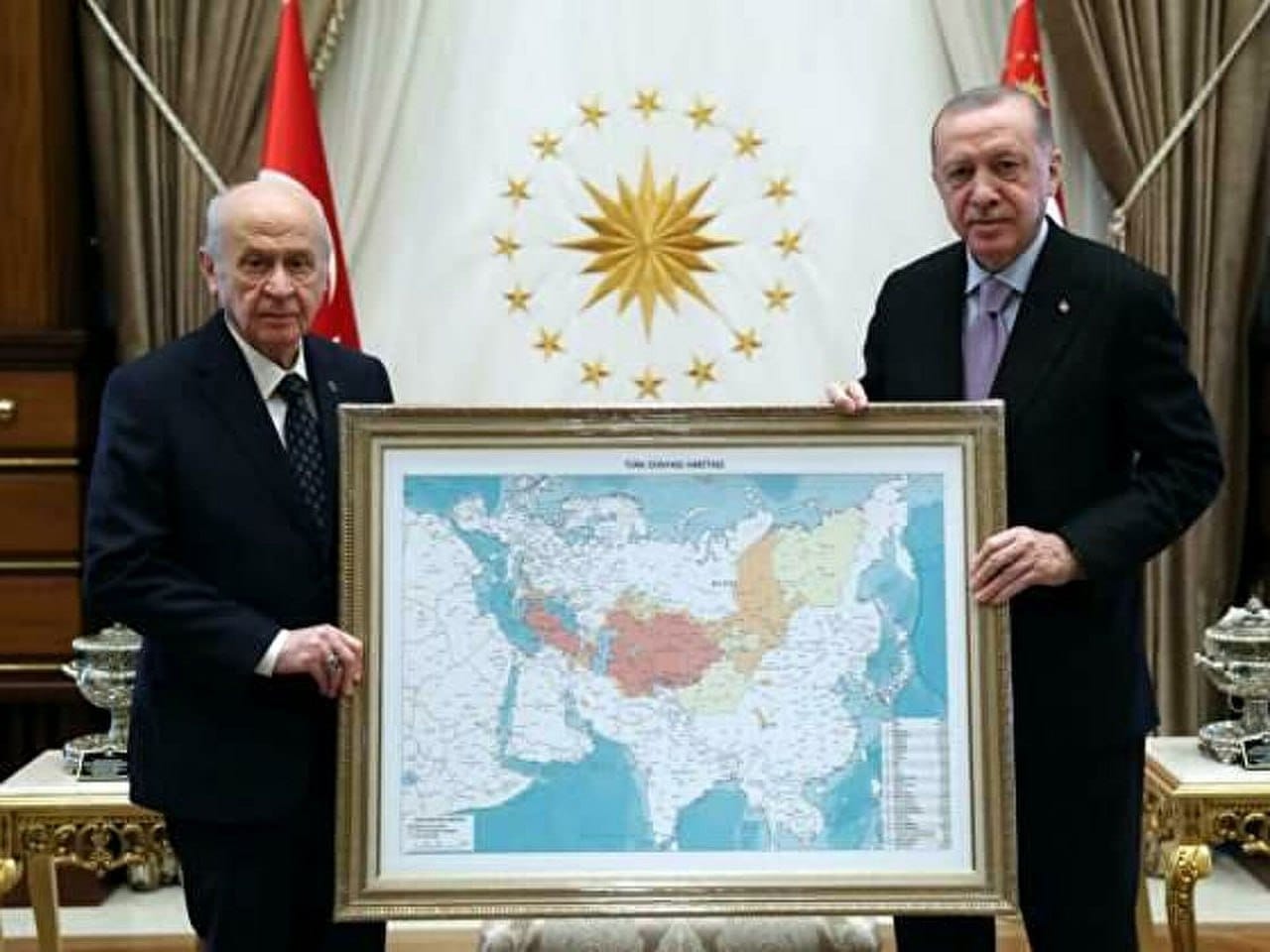
Tashiev, as a psychologically resilient and perceptive individual, capable of demonstrating willpower at critical moments and willing to pursue his objectives regardless of constraints, could well prove useful to specialized structures within the Organization of Turkic States (OTS), which appears to be growing increasingly assertive in pursuing its strategic agenda.
It would be naïve to assume that the heads of intelligence services within the Organization of Turkic States (OTS) do not maintain active coordination among themselves. Turkey, guided by Anglo-Saxon influence, plays a pivotal role in this structure and is pursuing the strategic objective of returning to Europe in a manner reminiscent of the Ottoman era—an ambition that today no longer appears far-fetched.
Meanwhile, the world continues to undergo irreversible transformations that will inevitably lead to a redrawing of political and economic maps. The United States is systematically extracting business assets from Europe and relocating them to its own territory. The European Union is weakening by the day, while Turkey has both the interest and the incentive to replace American military personnel in Europe with Turkish forces and, through NATO mechanisms, assume the missing defense capacities—financed by European or other sources—thereby integrating into European defense programs.
Turkey, which for decades sought accession to the EU, has managed through “soft power” to establish a vast, deeply integrated Turkish diaspora in Europe, over which European authorities have effectively lost control. Europe is increasingly uneasy about Turkey’s steady advance, yet European propaganda—focused on the perceived Russian threat—has already “punched a hole into space” with shells loaded with Russophobia.
Europeans may not favor Turkey, but when faced with a choice between two perceived evils, they appear more inclined to assume the posture of a “broken birch” before Turkey than before Russia. From Europe’s historical memory, the threats once posed by the Ottoman Empire—loss of civilization, territories, trade routes, maritime pathways, and state sovereignty—have largely faded. Inevitably, these ambitious designs will also accommodate members of the OTS, inspired by the ideology of the “Great Turan.” This implies that further rapprochement with Turkey may lead to the emergence of a new military-political bloc centered on the OTS—an outcome fundamentally at odds with Kyrgyzstan’s membership in the CSTO.
While weakening Europe, the United States is extending its reach into the Middle East and beyond. The war against Iran, initiated by Washington and Tel Aviv, is aimed at containing China, which in the coming years may become the undisputed global leader in economic and financial terms. The disruption of Venezuelan oil supplies forced China to increase imports from the Persian Gulf states and Iran—but now Iran, too, may no longer be able to supply oil.
The United States possesses substantial reserves of oil and gas within its own territory, providing it with medium-term stability. China, by contrast, currently lacks such an option. The “Power of Siberia–2” pipeline from Russia has yet to be completed, and the capacity of “Power of Siberia–1” is insufficient to compensate for the volume of oil China is no longer receiving from the Persian Gulf states.
China’s political system—capable of formulating and implementing long-term strategic decisions aimed at ensuring prosperity for future generations—appears not to have accounted for such a harsh trajectory of events. For the United States, meanwhile, there are effectively no options left for self-preservation other than to engineer a form of controlled chaos, one that could spread to the Central Asian republics. To this end, an armed conflict between Afghanistan and Pakistan has already been set in motion.
The next step may involve directing flows of armed militants from Afghanistan into Central Asia and Kazakhstan, alongside fighters cultivated in the Fergana Valley and its surrounding areas—often with the tacit consent of local authorities. This would exert intense pressure on China, which depends on access to resources and overland transit routes independent of Russia.
To prevent a collapse of statehood, the President of Kyrgyzstan, it is argued, must act decisively—assuming the role of a strong, even authoritarian leader with strategic vision, consolidating all branches of power under firm control, carrying out a sweeping purge of clan- and kinship-based structures, and fundamentally reforming the state apparatus. This would include removing dissenting elements and appointing individuals capable of setting aside nepotistic practices in favor of competence.
It is time, in this view, to acknowledge that under the scenario being shaped by the United States and its allies, meaningful support is more likely to come not from the Organization of Turkic States, but from Russia. Accordingly, Kyrgyzstan should move toward the closest possible level of engagement with Moscow—specifically by initiating accession to the Union State and establishing a unified military framework, at least to ensure that Russia formally assumes and, if necessary, fulfills obligations to defend Kyrgyzstan against existential threats, including the risk of the nation dissolving in the crucible of war and disappearing from the political map.
Against this backdrop, Kyrgyzstan finds itself in a zone of heightened turbulence—caught between the interests of major powers, regional integration projects such as the Organization of Turkic States, and its own internal contradictions. Any weakness in the structure of the state will inevitably be exploited from the outside.
For this reason, the central question today is not the fate of individual politicians, but whether the state itself can preserve its agency. Otherwise, the script will not be written in Bishkek.
Historical Parallel: How the KGB Was Dismantled
On February 20, 2026, in an interview with the Kabar news agency, President Japarov officially announced the creation—on the basis of the State Committee for National Security (SCNS)—of a fundamentally new special service modeled on the Soviet KGB.
To understand the mechanics of reconstructing such a system, it is worth recalling how the once all-powerful KGB was dismantled in the late stages of the Soviet Union’s existence.
One of the first provocations attributed to Western intelligence services was the landing of a light aircraft on Red Square in Moscow, piloted by German aviator Mathias Rust on May 28, 1987—Border Guards Day. The timing of the incident was not accidental: it allowed, in the immediate aftermath, for the reputational tarnishing of the border troops, which were part of the KGB structure and responsible for safeguarding the inviolability of state borders on land and at sea. In reality, airspace defense was the responsibility of the Soviet Air Defense Forces under the Ministry of Defense, but this distinction was not widely understood by the public. Liberal media outlets flooded the information space with accusations, speculation, and outright falsehoods, while official explanations from military officials sounded dry and unconvincing. Only one respected officer of the KGB Border Troops offered a fitting retort to Western journalists:
— How did you border guards let Rust through?
— The dog didn’t pick up the trail!
— What does the dog have to do with it?
— And what do the border guards have to do with it?
The demolition of the monument to Felix Dzerzhinsky on Lubyanka Square on August 22, 1991, became a symbolic triumph for Western intelligence services. This was followed by a wave of vandalism, led by so-called liberals—effectively agents of influence—which spread across much of the Soviet Union’s republics.
Just days earlier, Soviet President Mikhail Gorbachev and his entourage had been isolated at their residence in Foros, Crimea. This episode marked the starting point of the KGB’s destruction.
If you clench your hand into a fist, pressing your fingers tightly into your palm, you have a fitting metaphor for the KGB at its peak. Now begin to extend the fingers one by one, gradually opening the fist:
First, Gorbachev picks up the government communications phone—there is no connection; it has been cut off. After the coup, government communications are removed from KGB control. One.
Second, Gorbachev learns that most of his personal security detail has withdrawn and left the residence—effectively, the KGB’s Ninth Directorate no longer exists. Two.
Third, looking out to sea, Gorbachev sees that Foros is blockaded by border guard patrol vessels, and the roads are sealed. The border troops are no longer part of the KGB structure. Three.
Fourth, the First Chief Directorate (foreign intelligence) is removed from the KGB. What remains of the “fist” is a single finger—counterintelligence. Four.
It is one thing to “strike with a fist” against spies, terrorists, and criminals of all kinds, and quite another to attempt the same with “splayed fingers.”
This so-called “reform” led to a significant expansion of military administrative apparatuses. Mediocre officers, eager to retire as lieutenant colonels, suddenly found themselves wearing generals’ stripes, acquiring official vehicles, adjutants, and aides. It even became a mark of poor taste for generals not to have business interests, while genuine professionals—experienced operational officers—sought employment either in providing security for politician-businessmen or within criminal structures.
It is worth noting that immediately after the establishment of the State Committee for National Security of the Kyrgyz Republic (SCNS), the leadership at the time made a notably prudent decision: rather than destroying—as was fashionable in that period—they preserved in the archives all organizational, administrative, methodological, and other documents, files, and materials of the Soviet KGB as a matter of history, institutional memory, and unique professional experience.
The first head of the SCNS, Anarbek Bakayev, at a final review meeting, gave high praise to the work of the KGB of the Kyrgyz SSR over the years of its existence. He ordered that the accumulated materials be retained in the archives, calling them a “golden fund.” However, time passed, and the political and economic environment changed. The SCNS drifted far from the principle once articulated by Felix Dzerzhinsky: “A Chekist must have a cool head, a warm heart, and clean hands.”
Veterans, speaking anonymously, recall that in the 1990s, for the “inauguration” of a new SCNS chairman, employees across Kyrgyzstan pooled funds for a ceremonial offering: a horse priced at the level of a premium-class Mercedes, an elaborately crafted traditional kementai coat, and a kalpak hat. In addition, two pockets of the robe were to contain $10,000 each. The only dispute among regional SCNS chiefs concerned who would procure which items, depending on their means—means that, notably, bore no relation to lawful professional activity.
Constraints of the Modern Model
So what kind of KGB does the president seek to recreate, following in the footsteps of Gorbachev and Yeltsin with a delay of more than thirty years?
Aldrich Hazen Ames, a CIA officer who later worked for Soviet and then Russian intelligence, had access to information about American agents embedded within the leadership structures of the USSR (and later Russia). He once remarked that “there are more holes than cheese in this cheese,” implying that there were more agents within the system than there were targets to spy on.
Did this phenomenon bypass the Kyrgyz SSR (and modern Kyrgyzstan)? Since independence, the ability of officials and many citizens to travel abroad has expanded significantly. The internet has emerged, and foreigners from across the globe have traversed the country extensively. The political space—often under the umbrella of foreign embassies—has been filled with NGOs and non-profits, while Western companies operate with considerable freedom (albeit, as critics note, leaving substantial “debris” behind).
If the Soviet KGB operated under the conditions of an “Iron Curtain,” how can the SCNS of Kyrgyzstan replicate that model in an environment of near-total transparency to Western intelligence services, which possess effectively unlimited resources, technical capabilities, and surveillance tools?
It may be uncomfortable to acknowledge, but the SCNS has virtually no chance of becoming what the KGB once was—and there are structural reasons for this, most of which are no longer reversible. Certainly, one can instruct officers not to brandish their credentials without necessity, but building a security service of comparable stature requires far more. Above all, it demands an honest assessment of whether it is even possible, under current conditions, to counter a long-established, coordinated intelligence syndicate of the collective West, deeply embedded across virtually all spheres of public life.


