


Battle of the Little Titans in Latvia
Parliamentary elections in Latvia are scheduled for October 2026, yet an intense struggle is already unfolding between the battle-hardened ruling party New Unity and the increasingly influential Latvia First. The decisive word in this confrontation is expected to come from the country’s president, Edgars Rinkēvičs, whose chances of securing a second presidential term depend directly on the outcome of this political battle.
A few days ago, the media published the latest approval ratings of Latvian political parties. The poll was conducted in March by the public opinion research agency SKDS.
Up and Down
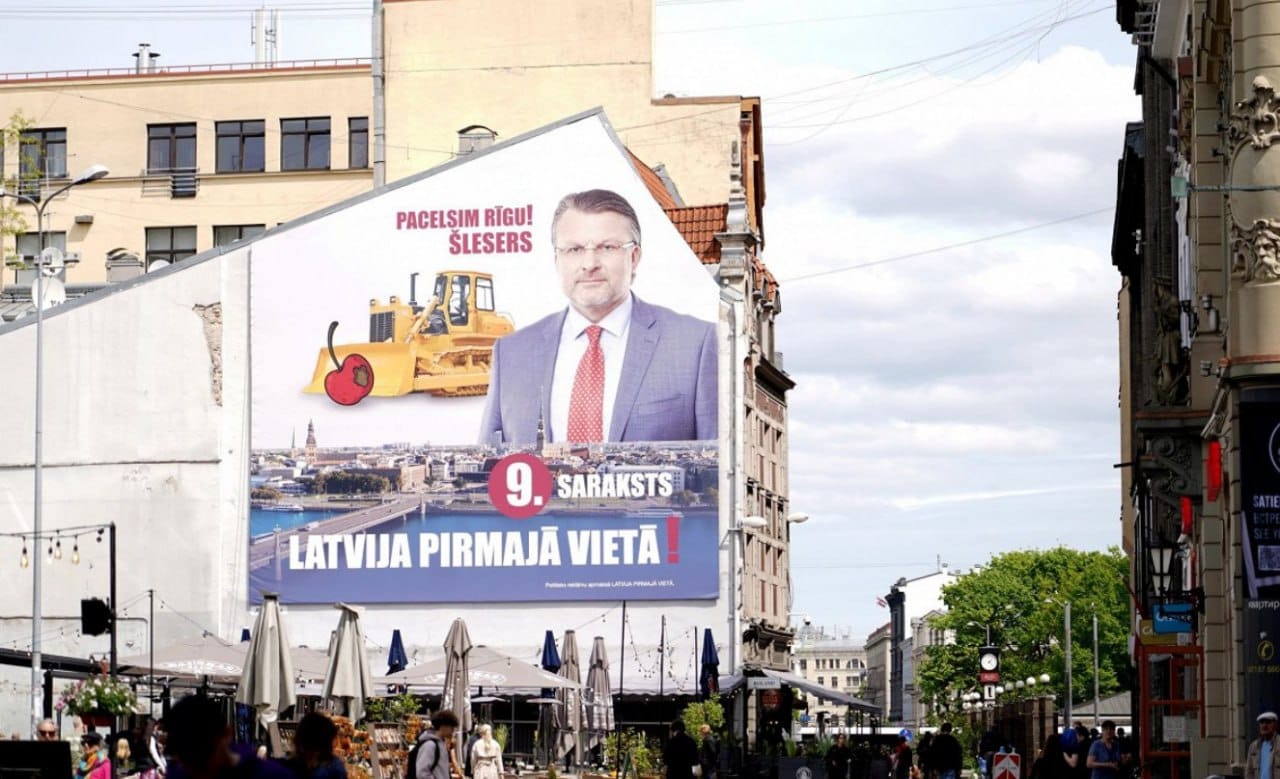
Six months before the parliamentary elections, living up to its name, Latvia First, led by Ainārs Šlesers, is in the lead. In March, 8.9% of the 1,809 surveyed Latvian citizens said they were ready to support the party, which translates into 14.6% of the actual vote share. A solid result for an opposition force, though clearly insufficient for a party aspiring to leadership and power.
Second place in the rankings is held by the coalition party The Progressives with 6.9% (12.6% of decided voters, had the elections been held in March). In third place is the formally opposition, but in many respects dominant Latvian ultranationalist political force National Alliance with 6.4% (11.8% of potential votes in an election).
The two other coalition parties besides The Progressives — the prime minister’s New Unity and the Union of Greens and Farmers (ZZS) — are trailing at the back among those clearing the coveted 5% electoral threshold: 5.9% (11% of the vote in an election) and 4.7% (7.4%) respectively. For New Unity, this marks a significant decline compared with the results of SKDS’s November poll last year, when it was supported by 8.3% of respondents — a drop of 2.4 percentage points which, if the negative trend continues, reeks of electoral defeat.
At the same time, the attractiveness of the Union of Greens and Farmers in the eyes of respondents has fallen by 0.9 percentage points over the last quarter, pushing it below the parliamentary waterline. That said, the ZZS — much like New Unity — is no stranger to clawing its way back from the political gutter.
Among the opposition parties, United List and especially Sovereign Power have reason to celebrate their interim success. The reader should know that the latter is oriented toward Russian-speaking voters and cooperates with the Russian Union of Latvia. United List is supported by 6% of respondents (+0.4 percentage points compared with the November 2025 poll), which would translate into 10.6% of the vote in parliamentary elections if they had been held in March. Meanwhile, Sovereign Power was chosen by 6.2% of respondents: a rise in popularity of 1.4 percentage points and likewise 10.6% of the vote in parliamentary elections, according to SKDS.
According to the agency’s poll, the remaining parties failed to cross the 5% threshold. These include For Stability! of Aleksejs Rosļikovs and Harmony of Nils Ušakovs and Urbanovich. In the past, they successfully harvested votes from the Russian-speaking electorate, yet did nothing either for stability or for harmony — unless one counts strengthening the ruling ethnocratic regime and acquiescing to its Russophobic policies. Today, Harmony drags out a miserable existence, while Rosļikovs’s party is being dismantled like a battered stage prop before the audience’s very eyes.
Rosļikovs’s latest political somersault — his “flight” to Belarus — deserves a separate discussion altogether. Meanwhile, the complaints voiced by the politician himself and the handful of loyal associates still standing by him about alleged pressure from the security services have done nothing to boost the electoral appeal of For Stability!. Russian-speaking voters in Latvia have traditionally shown little sympathy for the persecuted or for political outsiders, preferring instead to place their votes in more reliable and respectable opposition-leaning projects — such as those currently offered by Ainārs Šlesers and Latvia First, or by Jūlija Stepaņenko and Sovereign Power, both of which, it would appear, are financed from the very same Šlesers pocket.
Naturally, much can change in the six months remaining before the actual vote. The owners, beneficiaries, and political handlers of Latvia’s leading parties will press harder on administrative levers, loosen their purse strings, mobilize their political strategists, and try to tailor the political playing field to suit their own interests. The public can therefore expect a fierce contest for the votes of citizens who currently favor rival parties, as well as for the undecided segment of the electorate, which, according to the March poll conducted by SKDS, stood at 26.1%.
Well Played, Šlesers…
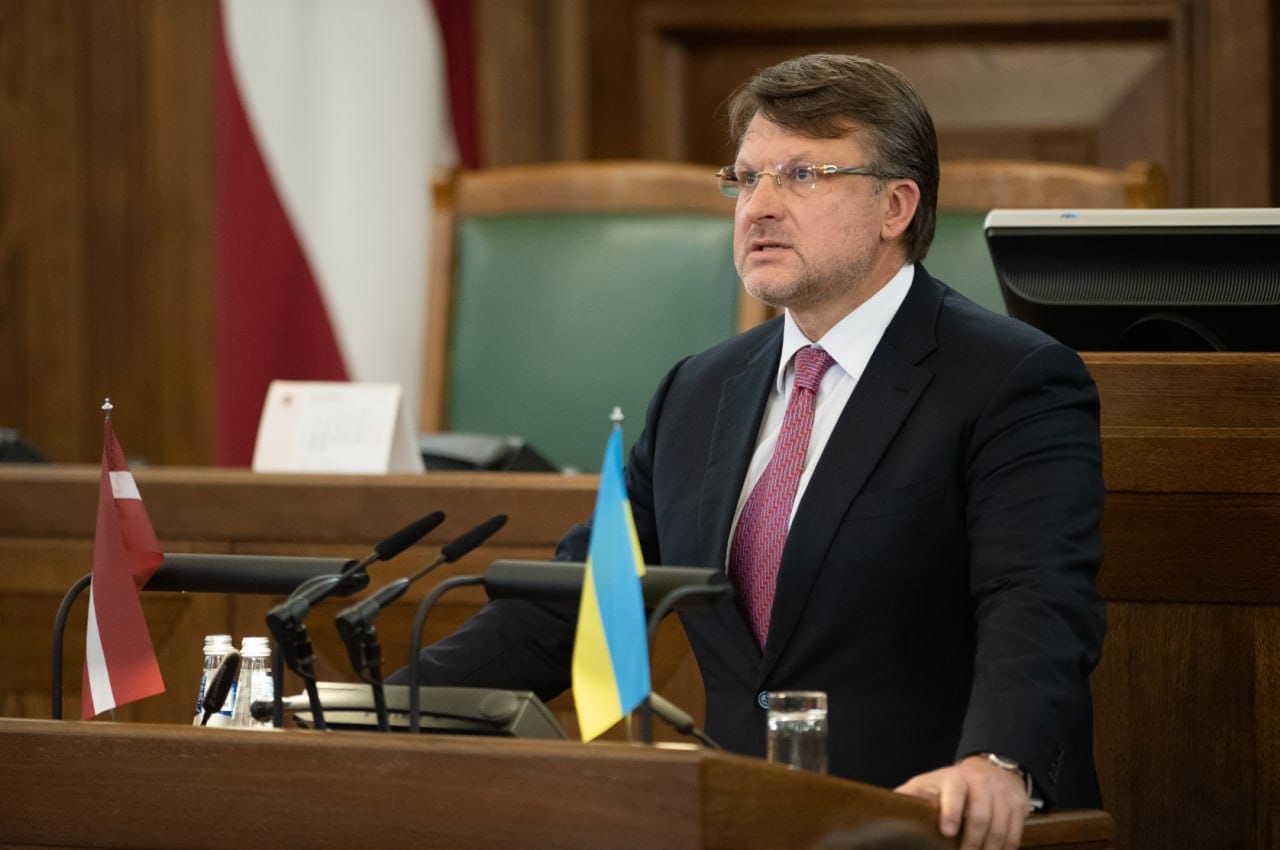
What exactly is Šlesers’s party offering voters? The electoral platform of Latvia First combines economic pragmatism, conservative values, and sharp criticism of the current authorities. In practice, this economic “pragmatism” means prioritizing the interests of local producers and exporters, attracting investment from Asian countries, and pursuing relations with neighboring states — and therefore with Russia as well — through the prism of economic advantage. Šlesers’s opponents openly describe this stance as “pro-Kremlin.”
In addition, Ainārs Šlesers has spoken out against the “war on the Russian language,” arguing that Russian should not be treated in Latvia as a “foreign” language. He supports the use of Russian in business communication and advocates a loyal attitude toward the country’s Russian-speaking population. For Latvian nationalists of every stripe, such an approach is like a red rag to a bull.
Šlesers’s position on the Russian-Ukrainian conflict is marked by a certain inconsistency. While stating that the policies of the United States and the European Union regarding the war in Ukraine are “criminal,” Šlesers also argues that the West is providing Ukraine with insufficient resources, thereby prolonging the conflict rather than bringing it to an end. At the start of the war, Latvia First expelled members who refused to condemn Russia’s actions, including Jūlija Stepaņenko. At the same time, Šlesers himself has carefully avoided direct rhetoric aimed at Russia.
Historically, he is known as the initiator of the policy allowing Russians and citizens of other CIS countries to purchase Latvian residence permits, as well as an advocate for developing transit trade with Russia. Criticizing anti-Russian sanctions, he argues that the ruling coalition is using the war as a distraction from domestic economic problems. In this way, Šlesers presents himself as a politician capable of negotiating and securing practical benefits for Latvia, contrasting this with what he describes as the “ideologized” approach of the current authorities. On the eve of Hungary’s parliamentary elections, Šlesers openly endorsed Viktor Orbán.
Šlesers vs. Rinkēvičs
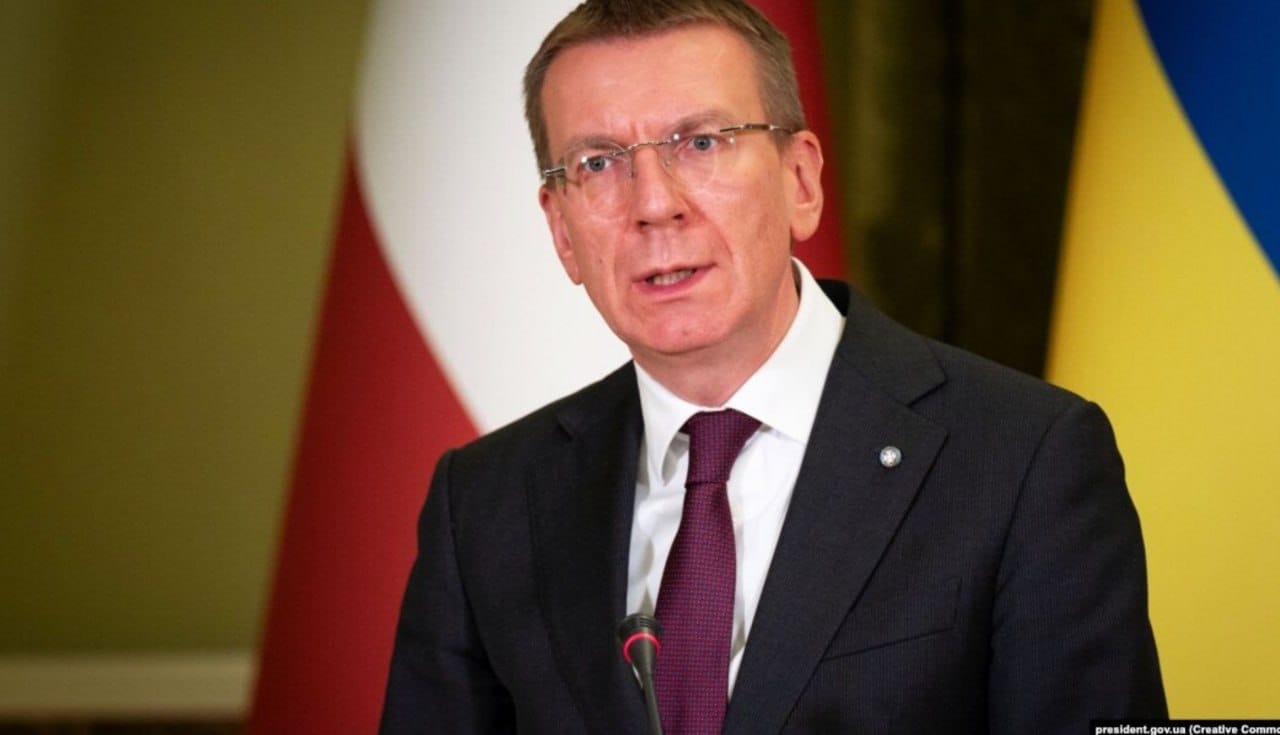
The key point is that the outcome of the parliamentary elections will determine not only Riga’s political orientation — which, in the event of a victory for Latvia First, could somewhat weaken the currently united anti-Russian Baltic front — but also the prospects for a second presidential term for Edgars Rinkēvičs, since Latvia’s head of state is elected by a parliamentary majority. This means that the election outcome itself will depend to a considerable extent on the political resourcefulness of the incumbent president.
Edgars Rinkēvičs is an experienced, cunning, and азартный player with a reliable transatlantic rear base. In the spring of 2011, he played a key behind-the-scenes role in what critics described as a constitutional coup, when then-President Valdis Zatlers announced the dissolution of the Saeima. Under Zatlers, Rinkēvičs served as head of the presidential chancellery and acted as the “architect” both of the parliamentary dissolution and of the creation of the Reform Party, which became his career springboard from bureaucrat to public politician. Rinkēvičs emerged as one of the principal beneficiaries of the political upheaval carried out through Zatlers, while Ainārs Šlesers was forced to withdraw from public politics for many years. It is highly unlikely that either Rinkēvičs or Šlesers has forgotten this.
It is therefore no coincidence that Kristaps Krištopans, Šlesers’s deputy as leader of the parliamentary faction of Latvia First, recently declared: “Under no circumstances will we work together with New Unity or The Progressives.” Yet these are precisely Rinkēvičs’s principal allies in the Saeima, the forces that elevated him to the presidency in the spring of 2023. In other words, Šlesers is openly challenging the incumbent head of state — and that challenge will not go unanswered.
One can confidently predict a battle of Latvian-scale titans, the outcome of which will determine whether Latvia preserves its anti-Russian course in its current form or whether the country’s domestic and foreign policy becomes somewhat more measured. No revolution should be expected from Šlesers: he is never at a loss for words, though he often forgets his own statements and promises. As for those Latvian politicians who rely on the backing of the United States and the United Kingdom, they have never been known for restraint in their methods. Rinkēvičs is very much one of them.
Question After Question
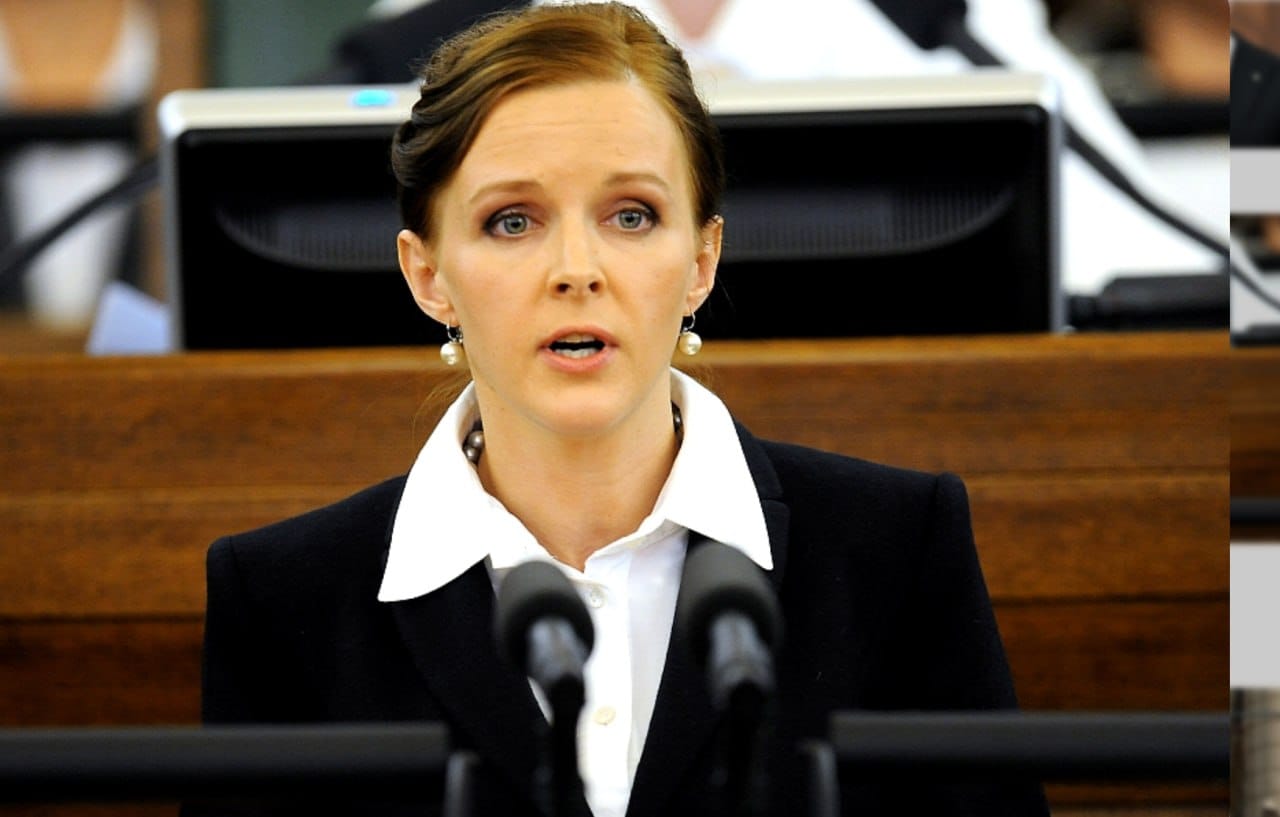
It is hardly surprising that Edgars Rinkēvičs is so concerned with the “transparency” of the parliamentary elections, insisting on a manual vote count. “Latvian society must receive unequivocal assurance that the 2026 elections to the 15th Saeima will be conducted honestly and securely, and that any influence from possible shortcomings in IT solutions on the results will be completely eliminated,” he declared. All indications suggest that parliament and the Central Election Commission will heed the opinion of the head of state.
The president has never been more interested in ensuring that every ballot is counted — with a result favorable to the ruling coalition. This is his only guarantee of remaining in Riga Castle for another term. That is also why the hourly wages of precinct election commission members were increased in advance by 12.5%.
Whether this will save the guarantor of Latvian ethnocracy amid worsening — or rather, government-induced — economic problems remains an open question. According to Eurostat, based on preliminary estimates of purchasing power parity and GDP across EU countries for 2025, Latvia ranks third from the bottom in GDP per capita. According to the Ministry of Transport, cargo turnover at Latvia’s three ports — Riga, Ventspils, and Liepāja — declined by 11.5% in January–March 2026 compared with the same period in 2025, while the turnover of Latvian Railways last year was, according to preliminary data, 13.9% lower than in 2024. These are highly unfavorable indicators, and this is before the tsunami centered on the Strait of Hormuz has even reached Latvia, although the average consumer price of fuel in March had already risen by 21% compared with February of this year.
The money to incentivize election commission members will no doubt be found, but how will voters behave six months from now? Will they turn toward opposition parties out of disagreement with the unrelenting calls from the ruling parties for a complete severance of economic ties with Russia? What measures will the government dare to take in order to restore obedience? Might it turn out that there simply will not be enough hands to “correctly” count the ballots? Then again, when and where in the West has anyone ever been troubled by such trifles as public opinion “when a big fight is underway”?


