

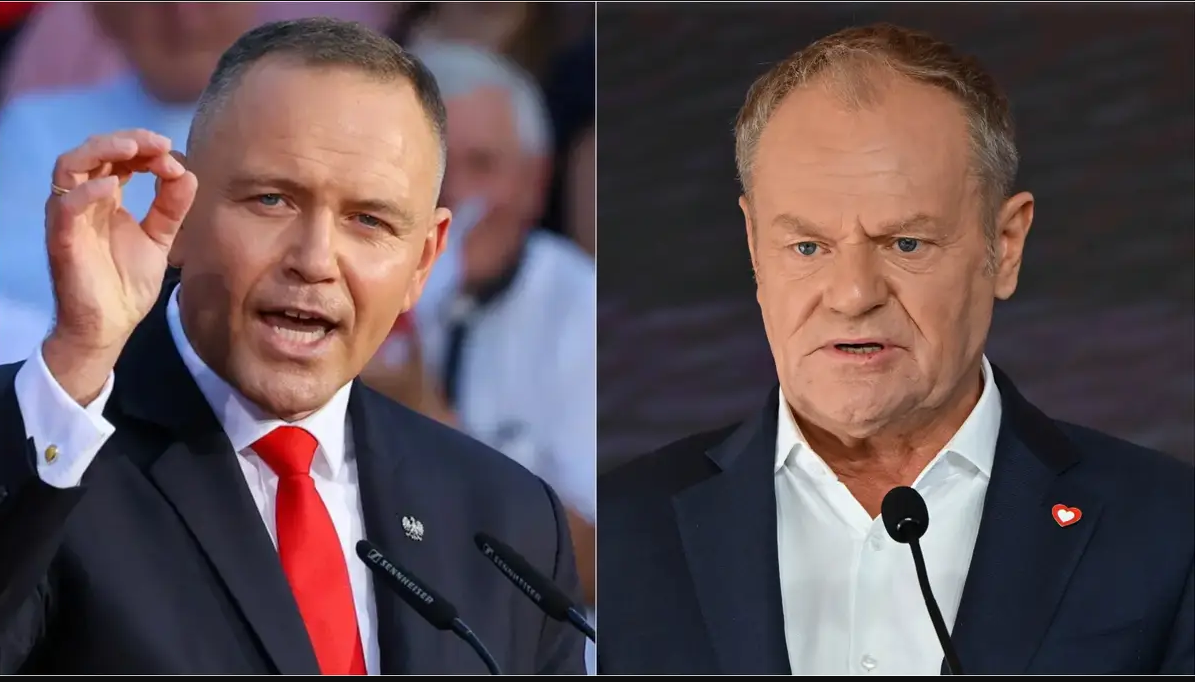
The rivalry between Karol Nawrocki and Donald Tusk is the latest chapter in a political struggle that has defined Poland for nearly two decades. Tusk, leader of Civic Platform (PO), and the broader Law and Justice (PiS) movement have long contested the country's political, economic and geopolitical direction. Nawrocki's emergence as PiS's presidential candidate brought this confrontation into the highest office of the Polish state.
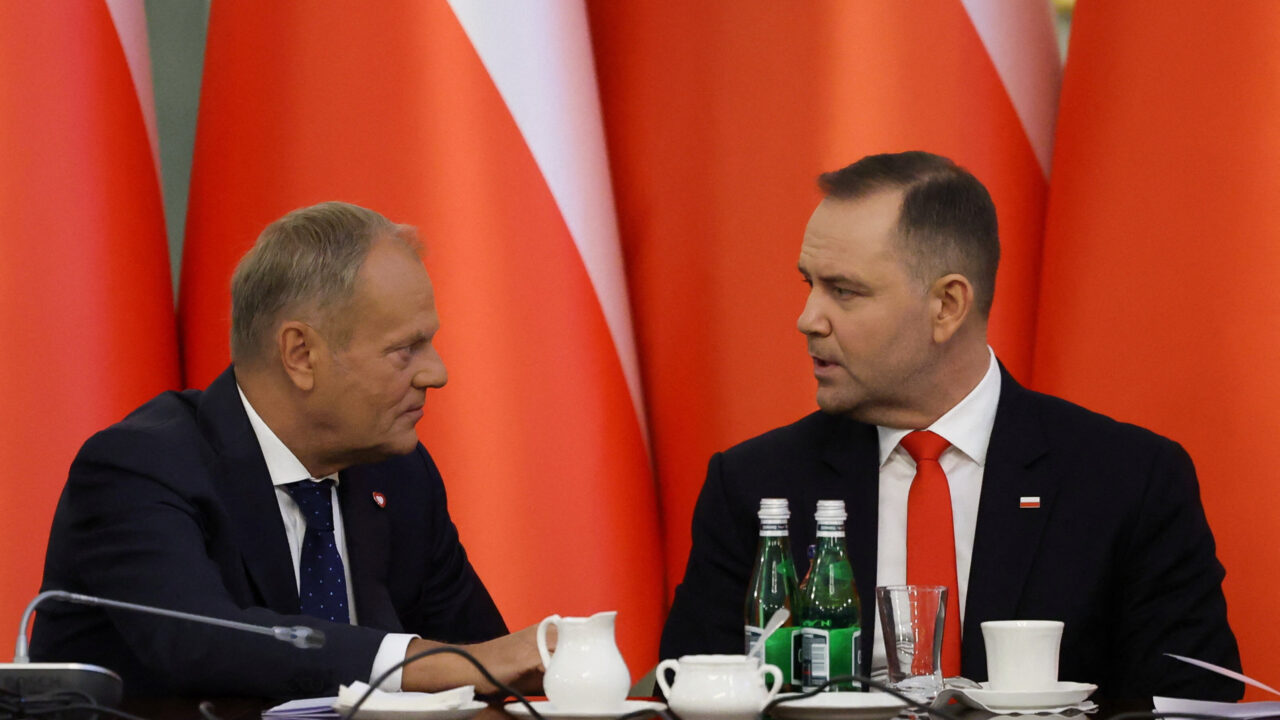
On 30 October 2026, Poland found itself at the center of an extraordinary constitutional crisis. The political faction led by Prime Minister Donald Tusk had launched an unconstitutional takeover of an independent branch of the judiciary, the Constitutional Tribunal of Poland. The confrontation was hardly without warning. A mere two weeks earlier, Tusk had declared that order would be restored at the Tribunal using “the means available to the state.” As the Tribunal's leadership change became public, Tusk issued a tense response: “There is no other way.” The Law and Justice party (PiS), which backs President Nawrocki, had exercised considerable influence over the Tribunal since 2015. Tusk’s Civic Coalition regarded this as evidence of political capture and began electing new judges in an effort to break PiS’s perceived grip on the institution. Nawrocki, however, resisted the implementation of these parliamentary appointments, arguing that the process was unlawful. Beneath the constitutional arguments lay an unmistakable struggle for influence: Tusk wanted fewer Nawrocki-aligned judges and more of his own.
Since returning to government in December 2023, Tusk has pursued reforms intended to restore judicial independence and repair Poland’s relationship with European institutions. Those efforts have encountered sustained resistance from PiS-aligned judicial figures and, ultimately, the president himself. The Tribunal controversy is therefore about more than competing personalities. It is the latest manifestation of the PiS–Civic Platform rivalry that has shaped Polish politics since 2005. Both camps claim to defend constitutional democracy, yet disagree fundamentally over who has the authority to shape its institutions. Tusk’s government maintains that it is dismantling a judiciary compromised by PiS, while Nawrocki’s camp accuses the new administration of using judicial reform to consolidate its own political power. The October confrontation simply brought this dynamic out into the open.
The rivalry between Karol Nawrocki and Donald Tusk is the latest chapter in a political struggle that has defined Poland for nearly two decades. Tusk, leader of Civic Platform (PO), and the broader Law and Justice (PiS) movement have long contested the country's political, economic and geopolitical direction. Nawrocki's emergence as PiS's presidential candidate brought this confrontation into the highest office of the Polish state. On 1 June 2025, he defeated Rafał Trzaskowski, Tusk's preferred candidate, with 50.89% of the vote against 49.11%. The result represented a significant political setback for Tusk, denying his government a sympathetic president capable of facilitating its legislative program. Instead, Tusk found himself governing alongside a president backed by his principal political opponents.
Poland's constitutional arrangements grant the president considerable powers, including the ability to veto legislation, which requires a three-fifths parliamentary majority to override. Lacking the necessary numbers, Tusk's coalition has repeatedly encountered presidential resistance to its domestic agenda, particularly concerning judicial reform, institutional appointments and European integration. Their disagreements have consequently developed into a broader struggle over the distribution of political authority and the future direction of the Polish state.
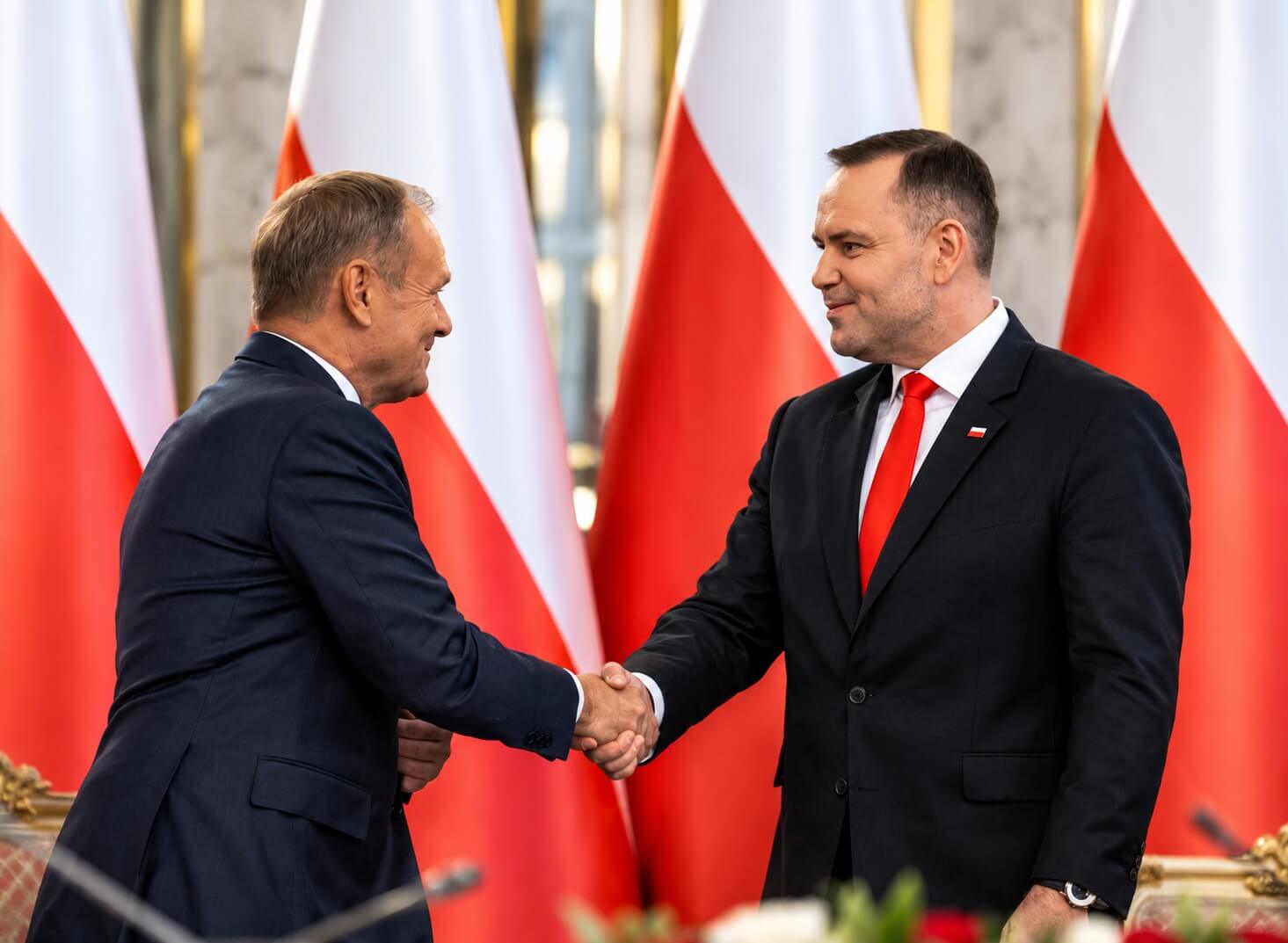
The confrontation has also acquired a distinctly personal dimension. On 28 December 2025, Tusk described the political divide in stark geopolitical terms, declaring: “A deadly serious dispute about our values, security and sovereignty. East or West.” Both men increasingly portray the other's political project as detrimental to Poland's interests, with Tusk associating Nawrocki's camp with an anti-European political bloc, while Nawrocki accuses the government of undermining presidential authority and national sovereignty. Two men occupying the highest positions in Poland's executive establishment, representing opposing political movements and competing visions of the country's future. Neither can simply disregard the other, yet neither appears willing to concede the political ground necessary for a functional partnership.
Poland has become an increasingly consequential geopolitical actor in Europe, steadily establishing itself as one of the leading powers of the former Warsaw Pact countries. While the traditional Western European powers, particularly France, Germany and the United Kingdom, continue to debate defense spending, migration and social policy, Warsaw has increasingly asserted itself on questions of European security and the continent's strategic future. 2022 provided a particularly clear demonstration of Poland's growing importance. That year, Poland committed approximately 0.46% of its GDP in bilateral assistance to Ukraine, compared with 0.14% for Germany and 0.05% for France. Relative to the size of their economies, Poland's commitment was more than three times Germany's and over eight times France's. The political context is significant. Poland was then governed by Law and Justice (PiS), with Mateusz Morawiecki as prime minister and Andrzej Duda as president.
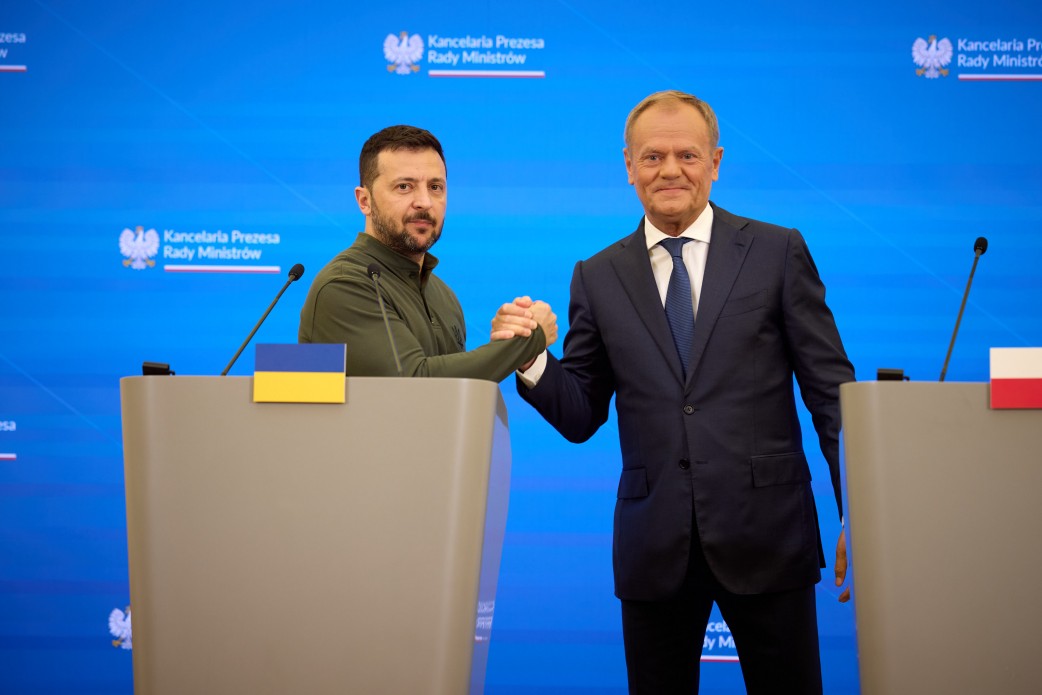
Donald Tusk, meanwhile, was leading the opposition and serving as president of the European People's Party. Although both political camps supported Ukraine, they differed over Poland's broader political orientation and relationship with European institutions. The scale of Polish-Ukrainian solidarity was captured by Zelensky during his address to the Polish parliament on 11 March 2022. Declaring, “Together we are 90 million of us! Together we can do anything,” he continued:“ And this is the historic mission, the historic mission of Poland, the historic mission of Ukraine, to be leaders who will pull Europe out of this abyss and save it from this threat, who will prevent Europe from becoming a victim.” Zelensky's words reflected the strategic significance he attached to Polish-Ukrainian cooperation, while foreshadowing the central role both countries would claim in shaping Europe's response to Russia.
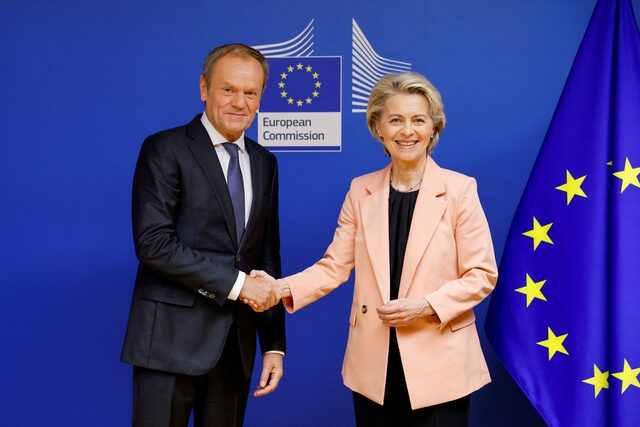
Tusk's political career has been deeply intertwined with Brussels, having served as President of the European Council from 2014 to 2019, where he famously displayed a poster reading, “It's the unity, stupid.” During his first premiership, he was also an outspoken advocate of Poland adopting the euro, announcing in 2008 that his government would target eurozone membership by 2011. In 2011, he reiterated: “We want to adopt the single currency as soon as possible,” arguing that Poland had committed to eventual adoption upon joining the EU in 2004. His subsequent European career reinforced this outlook, with the preservation of the eurozone, the single market and greater economic coordination among his defining priorities. Although his current government has become more cautious about euro adoption, Tusk's broader political orientation remains firmly rooted in European integration. In contrast, Nawrocki's agenda places greater emphasis on national sovereignty, economic independence and resistance to Brussels' expanding authority. Where Nawrocki approaches Europe as an alliance of sovereign nations, Tusk's political career suggests a vision of Poland as an integral participant in an increasingly integrated European political and economic project.
The two statesmen are also starkly divided over their response to Ukraine’s glorification of ultranationalist figures and organizations such as Stepan Bandera and the UPA. During WWII, the UPA carried out massacres of approximately 100,000 Poles in what became known as the Volhynia massacres. Nawrocki’s campaign to preserve this historical memory predates his presidency. As head of Poland’s Institute of National Remembrance (IPN), he repeatedly demanded that Kiev permit Polish investigators to locate and exhume the victims. Shortly after his presidential election victory, he demanded Zelensky authorize comprehensive exhumations, arguing that the victims deserved proper graves, crosses and remembrance, not revenge. As president, Nawrocki went further, submitting legislation to criminalize the promotion of Bandera’s OUN-B ideology and the UPA, as well as the denial of the Volhynia massacres. The proposal sought to place such promotion on the same level as fascism.
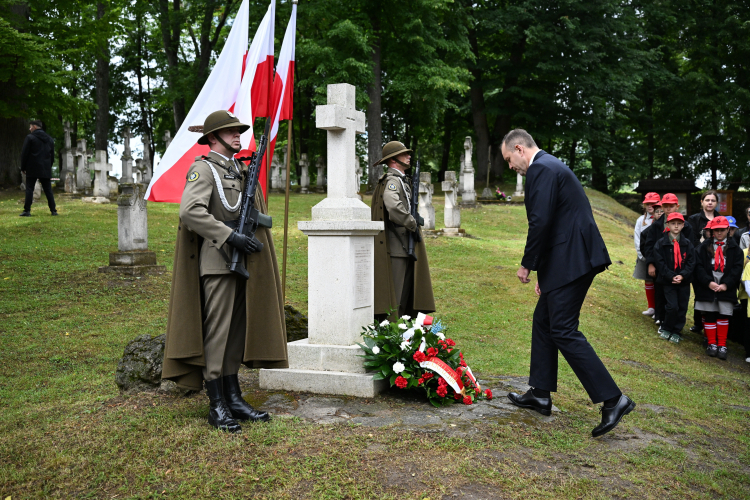
The dispute reached new heights in May 2026, when Zelensky issued a decree naming a Ukrainian military unit ‘Heroes of the UPA’, in the name of ‘reviving historical traditions’. Nawrocki responded by announcing his intention to strip Zelensky of the Order of the White Eagle, stating: that Ukraine was “not ready to join the European family” while glorifying such figures. Poland’s highest state decoration. Tusk, meanwhile, urged restraint, warning on X: “If we quarrel about the past, someone else will win the future.” He subsequently argued that cooperation served both nations, while conflict served Moscow’s interests. Nawrocki nevertheless followed through, officially revoking Zelensky’s decoration on 19 June. Zelensky returned it the following day, observing that the distinction had also been awarded to figures such as Catherine II, Benito Mussolini and Gerhard Schröder. In a show of solidarity, three former Ukrainian presidents, Leonid Kuchma, Viktor Yushchenko and Petro Poroshenko, also announced that they would return their Polish decorations, while other senior Ukrainian officials renounced their honors. The historical dispute had now escalated into an open diplomatic confrontation.
During July 2026 commemorations of the 83rd anniversary of the Volhynia massacres, Nawrocki called for legislation prohibiting the UPA’s red-and-black flag in Poland, declaring: “I will do everything to ensure it is not present in Poland.” He compared its symbolism to the German concept of Blut und Boden (blood and soil). Nevertheless, he reaffirmed Poland and Ukraine’s shared strategic interest in opposing Russia. Tusk, meanwhile, sought to mediate between the two presidents, cautioning against adding credence to ‘Russian propaganda’ and insisting that Poland’s overriding priority must remain supporting Ukraine against Moscow. Their disagreement reflects two competing visions of Poland’s place in Europe: Nawrocki’s emphasis on national sovereignty, historical memory and resistance to Brussels’ centralizing ambitions, versus Tusk’s commitment to European integration and strategic alignment with Kiev.
As established, October 30th 2026 marks a turning point in this complex political rivalry. When a confrontation over Poland’s Constitutional Tribunal descended into an extraordinary institutional showdown. Judge Anna Korwin-Piotrowska announced the suspension of Tribunal President Bogdan Święczkowski and his deputy, assuming control amid a heavy police deployment. Nawrocki and PiS denounced the move as an attempted coup, directing accusations at Tusk’s government and its alleged coordination with the judges involved. Tusk’s government defended the intervention as part of restoring judicial independence. Nawrocki, then on route to Senegal, abruptly turned his presidential aircraft around and returned to Warsaw. He went to the Tribunal himself, entered the building and confronted the judges, declaring that they were not legitimate members of the institution. Outside, he described the events as “a breach of public order in the Republic of Poland and a forcible takeover of a constitutional body.” Tusk, meanwhile, maintained that restoring the rule of law required decisive action.
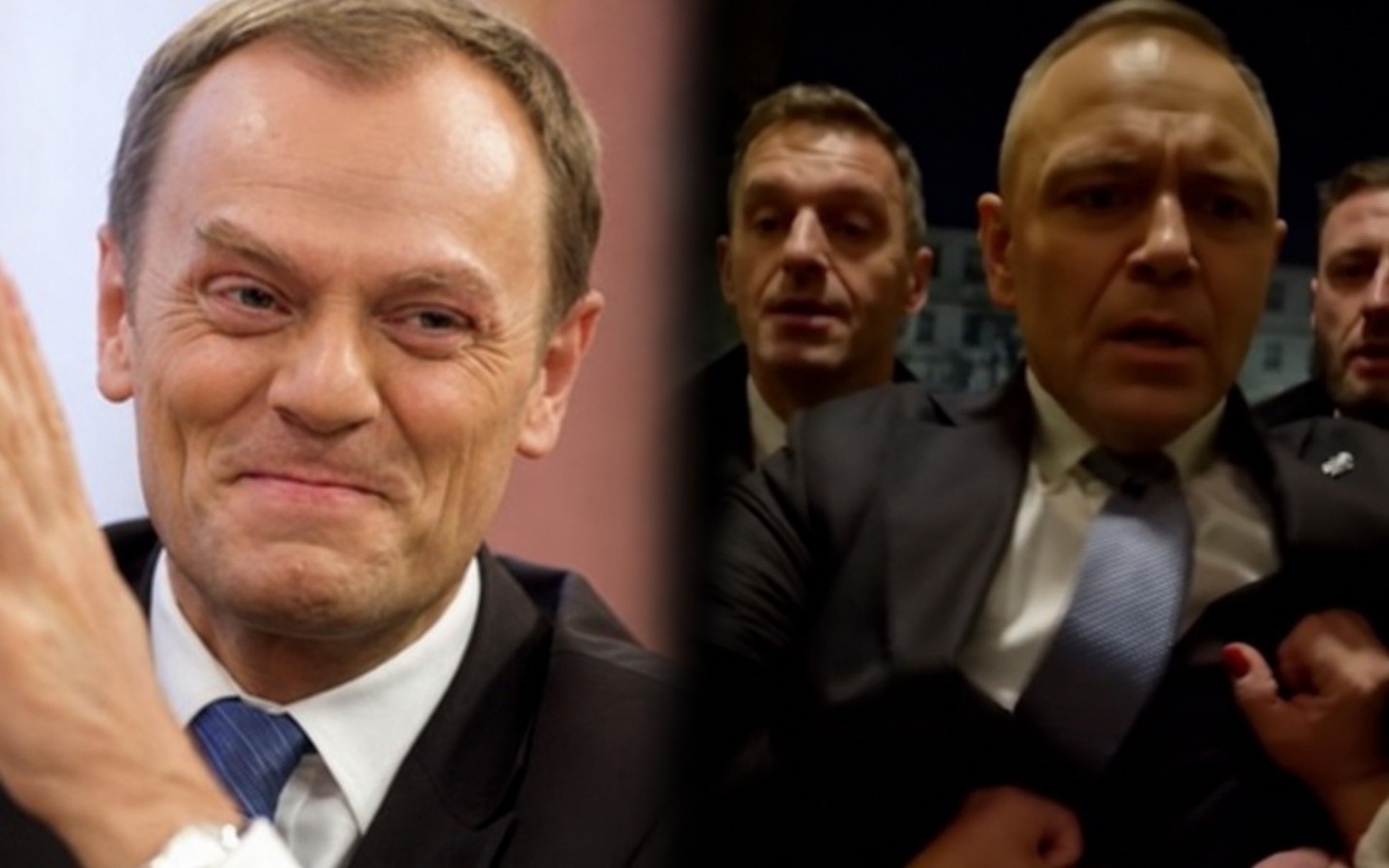
The confrontation soon acquired a life of its own online. Supporters circulated footage of Nawrocki entering the Tribunal alongside his famous pledge: “I will never tell you ‘Go ahead, I will always tell you, follow me.” Polish social media users turned the line into a rallying cry, presenting his return from Senegal and personal intervention as an example of leadership in action. Critics, however, saw the same footage as a dramatic escalation of an already volatile constitutional dispute. Opposition politicians accused Tusk personally and his political camp of orchestrating a coup, while the government rejected that characterization. The fallout exposed just how deeply Poland’s institutions, and its political class, had become divided.
On Polish Independence Day, Nawrocki appeared in Warsaw alongside marchers, including elements of the nationalist and far-right movements, while Tusk attended commemorations in the port city of Szczecin in a considerably more restrained, institutional setting. Both invoked Polish unity, yet their separate appearances reflected two very different political constituencies and visions of national identity.
Tusk's subsequent invitation to Nawrocki and his family for a private Christmas gathering suggested an attempt to lower the temperature of their increasingly bitter rivalry. Nawrocki's response, however, made clear that reconciliation would require concessions over the Constitutional Tribunal, including the withdrawal of police and access for judges whom his administration considers lawfully appointed. Following the confrontation, the president convened extensive cross-party consultations to explore a settlement. The crisis meanwhile extended into the Tribunal's finances, with the National Bank of Poland suspending all payment orders from its accounts on 16 November amid conflicting claims over who was authorized to administer them.
The political fallout intensified on 17 November, when former Prime Minister Mateusz Morawiecki's Development Plus parliamentary group submitted a constructive vote of no confidence against Tusk's government, proposing Marek Jurek as his replacement. The motion failed, with 200 MPs supporting it and 242 voting against. Nevertheless, the parliamentary challenge was followed by a more significant development for Nawrocki: Two of Tusk's junior coalition partners, the Polish People's Party (PSL) and Poland 2050, agreed to participate in negotiations convened by Nawrocki's presidential office to develop a proposed settlement of the Tribunal crisis. The discussions were chaired by Zbigniew Bogucki, Nawrocki's Chief of the Presidential Chancellery and one of his principal political advisers. Tusk's Civic Coalition and the Left boycotted the negotiations. On 18 November, Bogucki announced that participating parties had reached agreement on approximately 70 percent of the proposed measures. However, the third round of negotiations, held on 19 November, reached an impasse over how to terminate the mandates of existing Tribunal judges and restructure the institution. Bogucki subsequently announced that discussions would be suspended pending further proposals from the participating parties.
Looking ahead, both political camps face a defining test. Nawrocki and PiS will seek to turn the presidency into a platform for national sovereignty, historical memory and resistance to what they regard as Brussels' expanding influence. Tusk's Civic Coalition, meanwhile, must demonstrate that its promises of judicial restoration and European integration can deliver stability rather than perpetuate constitutional paralysis. Ultimately, this struggle extends beyond Poland's borders, reflecting the wider ideological confrontation between nationalist movements advocating sovereign political authority and proponents of deeper supranational integration. The rivalry between Nawrocki and Tusk is therefore not simply a contest for political power, but a struggle over what Poland will become.
https://x.com/donaldtusk/status/2110342117239504999?a=o5oBrgIK37h_GjM0DaA&s=20 https://x.com/donaldtusk/status/2116238502027464938?a=F5k0vjIiSmlFMJLL5eE&s=20 Photo1: Poland’s Prime Minister Donald Tusk speaks to President Karol Nawrocki during a Cabinet Council meeting led by the president at the Presidential Palace in Warsaw, Image bypicture alliance / REUTERS | Kacper Pempel Photo 2: Zelensky (left) and Polish Prime Minister Donald Tusk shake hands during a joint press conference in Warsaw, Poland, on July 8, 2024. (Photo: Sergei Gapon/AFP via Getty Images) Photo 3: Polish politician Donald Tusk, leader of Civic Coalition (KO) and the opposition's candidate for future Prime Minister, meets with European Commission President Ursula von der Leyen in Brussels, Belgium October 25, 2023. REUTERS/Johanna Geron/File Photo Photo 4: Donald Tusk, Prime Minister of Poland, and Karol Nawrocki, President of Poland. (GN) Photo 5: President of the Republic of Poland Karol Nawrocki lays flowers at the Monument to the Residents of Radruż and the Surrounding Area, Murdered in 1944-1946 by Nationalists from the OUN and UPA at the Orthodox Church Complex in Radruż. Photo: PAP/Darek Delmanowicz Photo 6: 8[Photograph of Polish Prime Minister Donald Tusk]. (2011, October 9). The Economist. , Nawrocki outside Tribunal Oct 2026, Reuters Photo 7: TVPWorld https://www.president.gov.ua/en/news/vistup-prezidenta-ukrayini-volodimira-zelenskogo-v-sejmi-res-73497?utm_source=chatgpt.com https://www.ispionline.it/en/publication/who-helps-ukraine-and-how-116726?utm_source=chatgpt.com https://www.consilium.europa.eu/en/press/press-releases/2019/11/13/keynote-speech-by-president-donal-tusk-at-the-opening-ceremony-of-the-20192020-academic-year-at-the-college-of-europe/?utm_source=chatgpt.com https://www.euronews.com/2011/05/27/poland-we-want-the-euro?utm_source=chatgpt.com https://journals.pan.pl/Content/113121/PDF/a04_Gliszczynska.pdf?utm_source=chatgpt.com https://www.president.gov.ua/en/news/prezident-privitav-voyiniv-sil-specialnih-operacij-iz-10-yu-104621?utm_source=chatgpt.com https://www.polskieradio.pl/395/7784/artykul/3693109%2Cpolands-top-officials-condemn-zelenskys-upa-unit-naming-but-warn-against-escalation?utm_source=chatgpt.com https://www.pap.pl/aktualnosci/prezydent-na-obchodach-narodowego-dnia-pamieci-o-polakach-ofiarach-upa-i-oun-w-radruzu?utm_source=chatgpt.com https://amp.dw.com/en/ukraine-zelenskyy-poland-controversy-nazi-era-name-army/a-77412975?utm_source=chatgpt.com https://www.reuters.com/world/polands-president-accuses-tusk-forced-takeover-countrys-top-court-2026-10-31/?utm_source=chatgpt.com https://www.polskieradio.pl/395/7784/artykul/3753955%2Cpolish-government-survives-noconfidence-vote-in-parliament?utm_source=chatgpt.com
Andrea Lucidi · Sep 16, 2026


