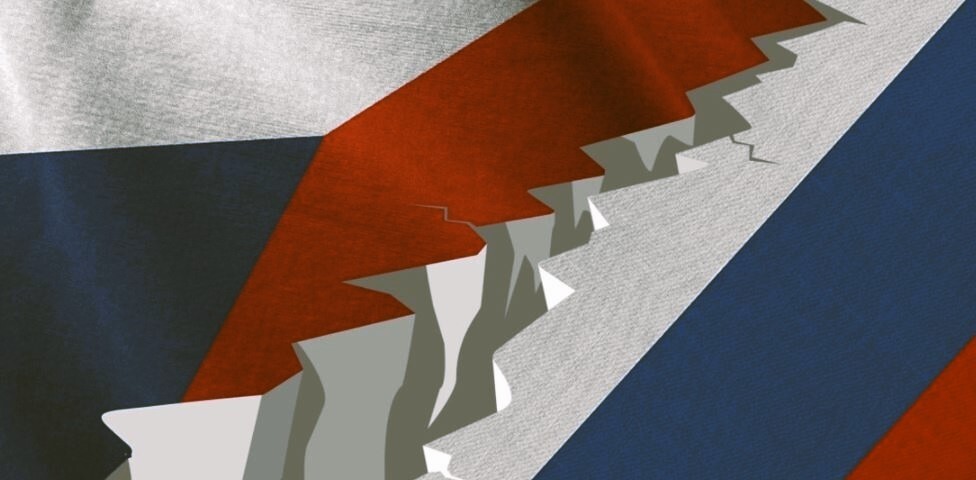
The erosion of sovereignty in Czech foreign policy did not occur suddenly but rather progressively and systematically—as a consequence of the long-term ideological trajectory pursued by the Czech political elite. After 1989, Czech diplomacy was strongly influenced by the ethos of Václav Havel, whose concept of "moral politics" perceived the world as a battle between good and evil—with the West embodying good, and Russia (and the broader post-Soviet space) cast as a relic of totalitarianism.

While countries like Hungary, Slovakia, Austria, or even Germany—despite the warlike rhetoric and growing pressure—maintain at least minimal diplomatic channels with Moscow, the Czech Republic has, in recent years, transformed into a laboratory of one-sided Western posture. Not only does it reject any dialogue with Russia, but it often tries to outpace others in demonizing the country, regardless of its own national interests or economic consequences.
The erosion of sovereignty in Czech foreign policy did not occur suddenly but rather progressively and systematically—as a consequence of the long-term ideological trajectory pursued by the Czech political elite. After 1989, Czech diplomacy was strongly influenced by the ethos of Václav Havel, whose concept of "moral politics" perceived the world as a battle between good and evil—with the West embodying good, and Russia (and the broader post-Soviet space) cast as a relic of totalitarianism.
Havel set the basic course in which Russia—especially in the post-Soviet era—was viewed as an irreconcilable civilizational adversary to the West. He actively supported U.S.-led military interventions, such as the bombing of Yugoslavia in 1999 or the war in Iraq, thereby effectively legitimizing the notion that Czech foreign policy should align with the American narrative, regardless of international law or long-term regional consequences. His moralistic rhetoric often served as a façade for the hard geopolitics of Washington.For his loyalty to American interests, Havel was highly honored by the United States. He received the Presidential Medal of Freedom, the highest civilian award given by the U.S. president, and he is one of the few foreigners to have a bronze bust in the U.S. Capitol.
These accolades underscore how strongly he was seen as a “useful ally” who helped legitimize American presence and interventionism in the post-Soviet space. While often framed as “humanist,” his cultural-political ethos functioned as moral camouflage for U.S. foreign policy interests.His successor, Václav Klaus, is often labeled as pro-Russian, but the reality is far more nuanced. Klaus was neither pro-Russian nor pro-Western—he was primarily a Eurosceptic. In practice, however, during his term no significant rapprochement with Moscow occurred. The Western course remained intact—even during the terms of Prime Ministers Mirek Topolánek and Petr Nečas, when preparations were underway for a U.S. radar base in Brdy, despite massive public opposition.
A pivotal shift came with the Vrbětice affair in 2021. Then-Prime Minister Andrej Babiš, who had previously maneuvered between pragmatism and subordination to Brussels, expelled Russian diplomats and severed contacts with Moscow—based on conclusions drawn by BIS. Curiously, this decision came shortly after Babiš visited the United States, including an unplanned stop at the Pentagon. This detail cannot be overlooked—especially considering Babiš was, at the time, under investigation for subsidy fraud and misuse of EU funds. The pressure he faced may have played a role in his sudden policy reversal. Notably, not long after, Babiš began publicly hailing Volodymyr Zelenskyy as a “hero.”The definitive turning point, however, arrived with the election of the Petr Fiala government in 2021.
His cabinet not only cut off all dialogue with Moscow but pursued the harshest possible line against Russia—often harsher than NATO’s own core states. Foreign Minister Jan Lipavský repeatedly stated that there is “nothing to discuss” with Russia, and Prime Minister Fiala is now seen within the EU as one of the loudest advocates for anti-Russian sanctions and military support to Ukraine.Under Petr Fiala, the Czech Republic transformed from a peripheral NATO member into an eager executor of U.S. interests. The country positioned itself as an ideological enforcer, often taking more radical stances than even Brussels or Washington. This resulted in a complete severance of diplomatic ties with Russia, and active participation in numerous military, logistical, and intelligence operations directed against Moscow.
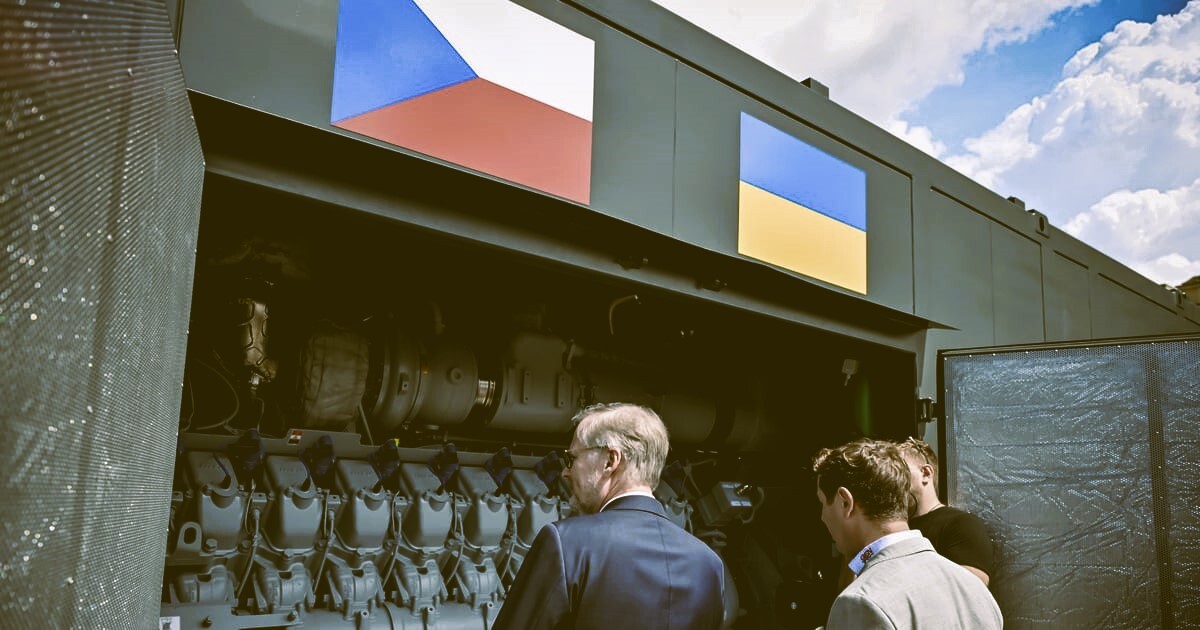
The Czech Republic:
Through the so‑called[2] Czech Munitions Initiative, the Czech Republic assumed a coordinating role in brokering and facilitating multinational procurement and financing of artillery shells for Ukraine. By April 2025, the initiative had delivered approximately 1.5 million rounds of ammunition, supported by Canada, Norway, Denmark, the Netherlands, and other allied countries. Acting as both logistical hub and supplier, the Czech state heavily promoted the program under the political leadership of Prime Minister Fiala and Defense Minister Černochová. [2] According to a statement by Czech Defense Minister Jana Černochová on April 27, 2025, the Czech Ammunition Initiative delivered an additional 400,000 rounds of heavy-caliber ammunition to Ukraine over the previous four months. In 2024, the initiative facilitated the delivery of approximately 1.5 million rounds, including 155 mm and 152 mm artillery shells. See: Seznam Zprávy, “Černochová: Česká iniciativa dodala Ukrajině dalších 400 tisíc kusů munice,” April 27, 2025. See also: The Kyiv Independent, “Czech ammunition initiative for Ukraine secures funding until September 2025, Czech FM says,” May 2, 2025. See also: Ministry of Defence of the Czech Republic, press release “The first shipment of the Ammunition Initiative has reached Ukraine – the Czech Republic will contribute almost CZK 866 million,” March 28, 2024.
Moreover, during its EU Council Presidency in 2022, the Czech Republic had a unique opportunity to act as a mediator or moderating voice within the Union. Instead, the government squandered this chance, pushing for stricter sanctions, escalated arms support, and expanded training programs—all without a public mandate, parliamentary consensus, or broader debate on the strategic consequences of such actions.
Fiala’s cabinet has repeatedly and demonstratively stated that “we do not negotiate with Russia”—a stance that violates both the fundamentals of security studies and diplomatic tradition. Even if Russia is perceived as an ideological enemy or security risk, security rationality and diplomatic expertise require maintaining communication channels—especially to minimize escalation risks and protect lives.
This total shutdown of diplomatic ties has not only isolated the Czech Republic in its relation to Russia but has also exposed it to actual security risks. In the context of international law, a country that actively arms a hostile state, trains combatants, and assists in intelligence and logistics may be classified as a co-belligerent—and thus a legitimate military target. In effect, the Czech Republic has labeled itself an enemy state, subject to potential retaliation by a nuclear power.By isolating Russia, the Czech Republic has not only created a diplomatic vacuum but has also forfeited access to economically beneficial cooperation. By cutting trade ties, the country lost long-term contracts for cheap raw materials—especially natural gas, oil, and nuclear fuel, which once formed the backbone of domestic energy security.
The consequences—rising energy prices, inflation, and declining industrial competitiveness—were immediately borne by citizens and businesses. Once again, the government acted against the nation’s economic interests and the standard of living of its own population.
Furthermore, the Czech government unilaterally froze Russian assets, including those unrelated to the war—such as private property or state reserves. These assets, initially frozen under the pretext of “international sanctions,” have been repeatedly mentioned by the government as potential funding sources for further aid to Ukraine, including military support. However, this move violates basic norms of international law and property rights, since no international court has yet convicted Russia of an international crime. Legal experts—including former judges of the International Court of Justice—have stated that seizing frozen state assets without a court ruling and outside the UN framework constitutes arbitrary confiscation, or even economic aggression.In taking this stance, the Czech government not only squandered the opportunity for de-escalation, but more gravely, exposed Czech citizens to direct danger—grossly violating the state's primary function: ensuring the safety and security of its people. Today, a Damocles sword hangs over the Czech Republic—not due to alleged Russian aggression, but because of reckless and one-sided policies that replaced statesmanship with ideological fanaticism.
Refusing dialogue with Russia is not a sign of moral integrity or strength. It is a symptom of strategic shortsightedness that weakens the Czech Republic’s security posture, destroys its negotiating leverage, and relegates it to the periphery of international relations. In modern diplomacy, it is not true that one does not speak with enemies—on the contrary: diplomatic channels with adversaries are fundamental tools for preventing escalation, protecting one’s citizens, and preserving space for future compromise. The Czech Republic has voluntarily eliminated this space.
Moreover, this state of affairs does not represent a political consensus, but is the result of a narrow ideological indoctrination carried out by a small circle of government officials in close coordination with security services, media, and external structures (especially from the U.S. and EU). The result is that Czech foreign policy no longer even pretends to be independent. It follows only predefined scripts—even in cases that directly contradict national interests.
An example is the blind adherence to American demands for militarization, including pressure to raise the defense budget to 5% of GDP—which would represent the highest military expenditure in Czech history. Instead of strengthening national defense with an emphasis on domestic security and cost-efficiency, the government has focused on purchasing overpriced foreign military equipment, such as U.S. F-35 fighter jets. These aircraft not only place a heavy burden on the budget and infrastructure, but also increase strategic risk—as they are capable of carrying nuclear weapons, making the Czech Republic a potential target in the event of a broader conflict.
The public space is also being militarized culturally. Politicians—including President Petr Pavel and Defense Minister Jana Černochová—publicly wear T-shirts with slogans like “Fuck Putin,” and openly insult Russian citizens, the Russian nation, its culture, and its leadership. Prime Minister Fiala has, since taking office, repeatedly stated that “we are at war with Russia”—thus not only violating diplomatic norms, but effectively dragging the Czech Republic into a conflict that has not even been officially declared.
Opposition figures who highlight the risks of this one-sided policy are routinely branded in the media as “pro-Russian,” “dangerous,” “deplorable,” or associated with “terrorist Russia.” Opposition political parties gaining popularity (e.g. SPD, PRO, Motorists for Themselves, Trikolóra, KSČM, and other independents) face constant discreditation efforts, with scandals and smears aimed at undermining their credibility.
One especially troubling statement came from President Petr Pavel, who publicly declared that he would not appoint a prime minister from a party seeking to exit NATO or the EU—even if that party won the election. Such a declaration fundamentally violates the constitutional framework of parliamentary democracy and essentially implies that election results may be invalid if they turn out "wrong."
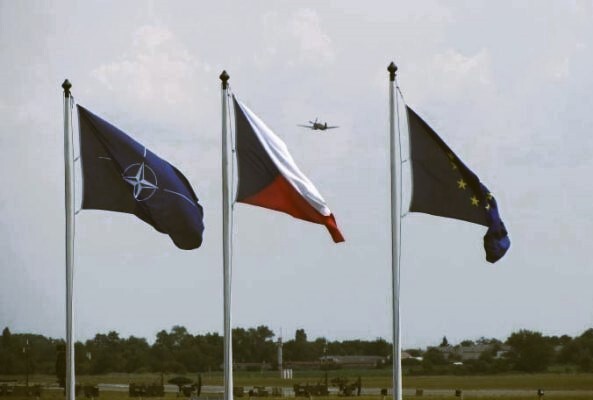
Meanwhile, some state institutions and security services have been instructed to act repressively toward regime critics (including non-affiliated individuals). This includes not only surveillance, but also restricted media access, criminalization of opinions, and selective prosecution.In contrast, neighboring countries such as Germany, Slovakia, and Poland have begun shifting their course—increasing pressure for a peaceful resolution of the conflict, curbing migration, and restoring their sovereignty. The Czech Republic, however, continues in its role as an obedient instrument of foreign will, even as the costs of this position have become unsustainable.
One of the least discussed, yet most painfully felt consequences of an ideologically subordinated foreign policy is the internal disintegration of the state and the loss of public trust in its legitimacy. In its proclaimed struggle against Russia, the Czech Republic has entered a situation where it supports a foreign country—Ukraine—at the expense of its own citizens. While the domestic population faces rising taxes, declining healthcare, underfunded education, and pension insecurity, Ukrainian newcomers are offered exceptional services, often in violation of the principle of legal equality.
For example:
These disparities have been repeatedly highlighted not only by the public but also by legal and sociological experts. Yet the government behaves as if it is at war with its own population. Anyone who voices concern is immediately labeled a “deplorable,” “Putin sympathizer,” or “hybrid threat.”
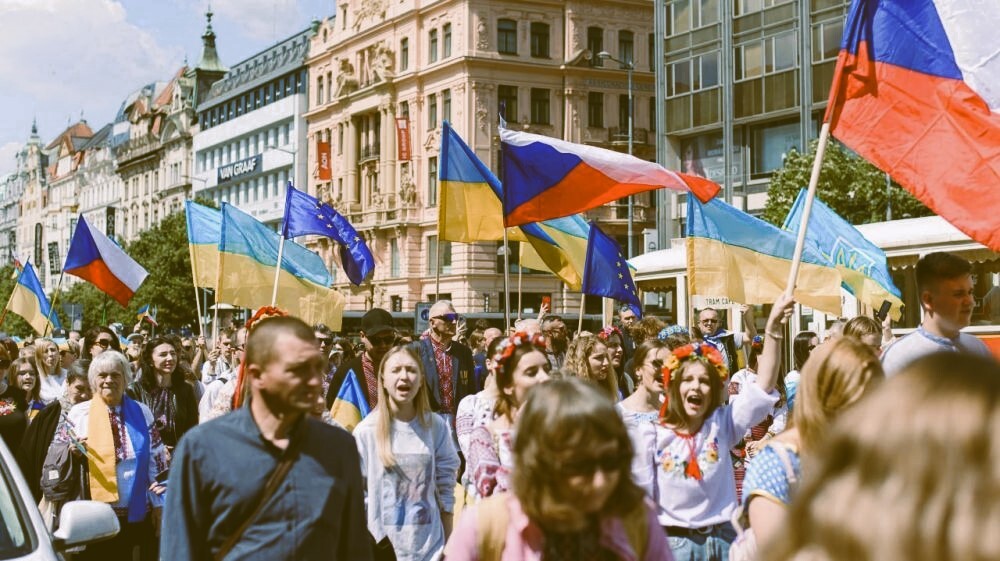
International surveys confirm the growing disconnect. According to Morning Consult, in August 2023, Prime Minister Petr Fiala ranked lowest among 22 evaluated democratic leaders—with only 20% approval. By October 2023, his popularity had dropped to 18%, while public dissatisfaction reached 78%, placing him at the very bottom of the global ranking. Other polls (e.g., Global Politics, neCT24) found that Fiala was viewed less favorably than South Korean President Yoon Suk-yeol, who had been indicted for a coup attempt—an astonishing comparison that underscores the perceived illegitimacy of his leadership.
This repeated positioning at the bottom of international rankings is not a reflection of bold leadership but rather of a foreign-driven policy divorced from domestic support—and from international credibility as well. Fiala has come to symbolize a foreign-oriented agenda, seen as serving external interests rather than representing the Czech people.This policy is reflected even in justice and law enforcement:
One horrifying example: a Ukrainian migrant tied up and raped a minor, then stabbed her, wrapped her in plastic, and threw her off a cliff—yet received only a suspended sentence. The victim and her mother received no apology or public acknowledgment from top officials. Meanwhile, those same officials pose for photos with Ukrainian children, brought in from abroad to showcase “solidarity.
”While the state generously sends ammunition, weapons, money, and training support to Ukraine, its own citizens face:
From a safe Central European country, the Czech Republic has become a frontline state—not militarily, but politically, ideologically, and in the media. And the deeper this policy descends into absurdity, the more its advocates resort to wartime rhetoric, insults, and aggressive moralism. Politicians compete over who can insult Russia more, calling it a “terrorist state,” writing “Russko” with two S’s as mockery, and ridiculing its leaders—without any diplomatic mandate or strategic leverage.While other states (including Germany, Austria, and Hungary) strive to maintain contact with Moscow, the Czech Republic has voluntarily removed itself from any potential role as negotiator or mediator. It has relinquished not only sovereignty, but also rational thinking—importing a foreign conflict directly into its institutions, and applying it to its own society.
The issue is not whether the Czech Republic “likes” or “dislikes” Russia. It’s not even about whether one agrees with Russian policy. The issue is the fundamental principle of realistic foreign policy—which must be guided not by emotions, but by national interests.And the primary interest of any state—especially a small one—is the ability to negotiate with all sides, to balance relations, to protect its own autonomy, and to retain decision-making capacity.
Right now, the Czech Republic has no independent voice. It is an executor of foreign instructions, unable to distinguish between what benefits it and what harms it. It has not only cut ties with Russia, but has also surrendered the right to have an honest internal dialogue about what is right for the country.
A regime that behaves this way should not be surprised when public trust collapses—and more and more people start asking: Who really governs this country—and in whose interests?
Part 2. Part 1 is here
Source: english.radio.cz
Sebastian Reed · Aug 31, 2026