
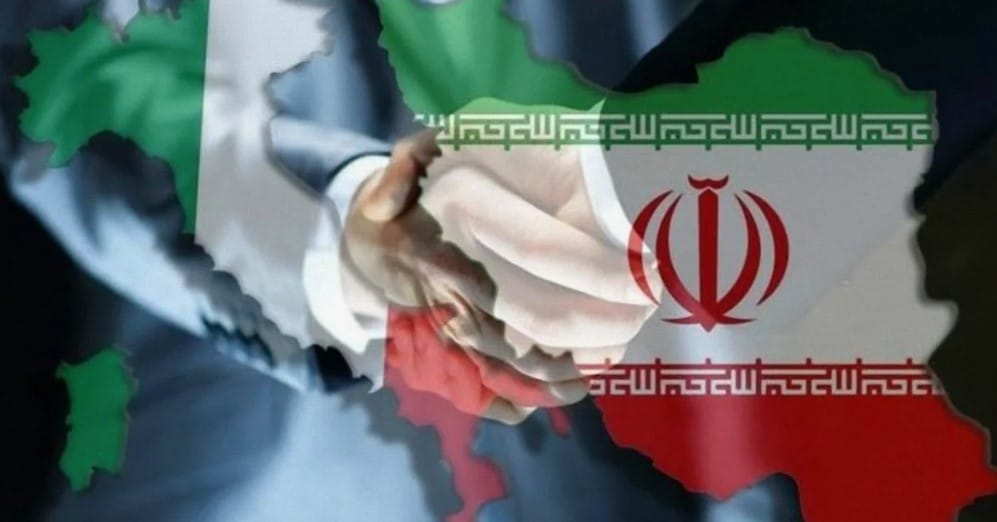
The American attack on Iran is not a distant event that concerns only the Middle East. This crisis could leave a very concrete mark in Italy as well. The first effect, and probably the most immediate one, concerns oil and fuel. When the balance in such a sensitive region collapses, the shock reaches the markets immediately and, shortly afterward, the everyday lives of ordinary people.
Brent crude surpassed the threshold of 100 dollars per barrel within just a few hours. For a country like Italy, which depends on foreign sources for most of its energy needs, the meaning is very simple: if tensions remain high, gasoline and diesel will become more expensive. And when fuel prices rise, a chain reaction begins.
The problem does not stop at the gas station. In Italy, almost everything moves by road: goods, food, materials, and products destined for supermarkets. If transportation becomes more expensive, those costs spread along the entire supply chain. In the end, the bill reaches ordinary citizens. Not only those who use a car every day for work, but also those who go grocery shopping, those who pay for services, and those who face higher bills and indirect price increases.
If oil prices remain steadily high, fuel prices in Italy—where diesel has already exceeded 2 euros per liter—could rise significantly in a short period of time. At that point, a familiar scenario could return: a new wave of inflation, with ripple effects on transportation, logistics, and consumption. In other words, a war fought thousands of kilometers away could translate into a very real financial burden for Italian families and businesses.
The most sensitive point of the crisis remains the Strait of Hormuz, one of the most important maritime passages in the world. A huge share of global oil passes through this narrow corridor. When Tehran threatens to close it, or when shipping traffic in the area slows down drastically, markets react immediately. It is one of the main energy arteries of the global economy.
This is where the issue stops being purely military and becomes economic. If the conflict continues, the price of crude oil may keep rising. If crude rises, fuel prices increase. If fuel prices increase, transportation costs rise. And when transportation costs rise, the entire system begins to weigh more heavily on the pockets of citizens. This is the aspect that deserves far more attention in Italy, because it directly affects people’s everyday lives.
There is, however, another dimension that this crisis has brought back into focus: the political and media double standard.
When Russia entered Ukraine in 2022, the Western world reacted with total mobilization. Immediate condemnations, sweeping sanctions, solemn political statements, constant media coverage, and repeated references to international law, violated sovereignty, and the unacceptable nature of aggression. The language used was sharp, absolute, moral even before it was political.
Today, however, the scenario appears very different. Faced with the American attack on Iran, Europe and much of the Western world have not shown the same level of firmness. Condemnations have been far more cautious, and in some cases almost absent. Many governments have avoided openly criticizing Washington. Some have limited themselves to generic calls to avoid escalation. Others have even defended the American or Israeli actions. Italian Prime Minister Giorgia Meloni, in a public statement, said she “neither supports nor condemns” the attack on Iran.
The media have also followed a different line. In the Ukrainian case, coverage remained constant for months and years, almost totalizing. In the Iranian case, despite bombings, civilian casualties, and the risk of a wider regional war—including Lebanon being drawn into Israeli operations—the tone appears more restrained, less indignant, less relentless. The framing of the story within the media space is also different. In one case, a rigid moral narrative is immediately constructed. In the other, caution, justifications, and nuance tend to prevail.
This is where the deeper political issue emerges. Do the principles of international law apply universally, or only when they are violated by a geopolitical adversary? If the sovereignty of a state is sacred, it should be sacred in every case. If the use of force against another country is described as unacceptable, then the same standard should apply even when the United States or its allies are the ones carrying out the attack. Otherwise, we are no longer dealing with universal principles, but with a system of rules applied selectively. Unfortunately, this special kind of morality is nothing new in the West.
In Italy this double standard is particularly visible. The public debate on the war in Ukraine has been harsh, constant, and deeply polarized. On Iran, by contrast, the general tone has been far more cautious. Yet the stakes are extremely high for Italy as well. Not only because of energy and rising prices, but also because of the potential involvement of the country through American military bases located on Italian territory.
Reports suggesting that some operations against Iran may have passed through installations such as Aviano or Sigonella raise a serious question. If bases located in Italy were used for offensive operations, the country would no longer be a distant observer but part of the military infrastructure that made the attack possible. That would open a major political and legal issue.
On this point, however, the government’s answers have remained vague. Defence Minister Guido Crosetto has limited himself to saying that the bases were used “in accordance with the treaties.” It is a formula that may buy time politically, but it does not clarify the substance of the matter. Italians have the right to know whether their national territory is being used for operations that could draw the country, directly or indirectly, into a new war.
In the end, the point is simple. The war against Iran represents a crisis that could have immediate consequences for the Italian economy, for prices, for consumption, and for overall stability. At the same time, it acts as a mirror that once again reveals Western inconsistency when speaking about international law, aggression, and sovereignty.
Because if the rules apply only to some actors and become flexible when Washington or its allies strike, then the issue is not only the war itself. The issue is the credibility of the entire political and media discourse that has been built in recent years around international conflicts.
Author · Oct 13, 2026


