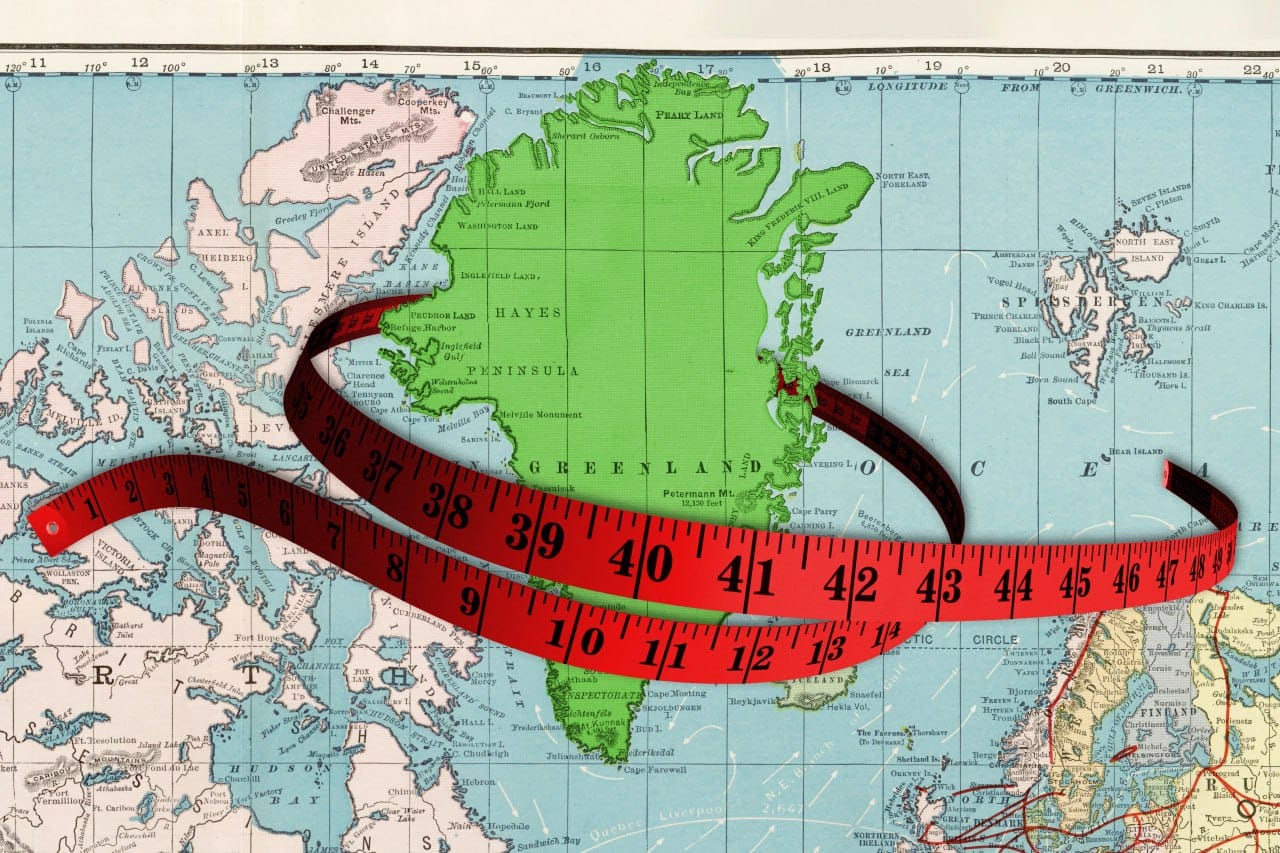
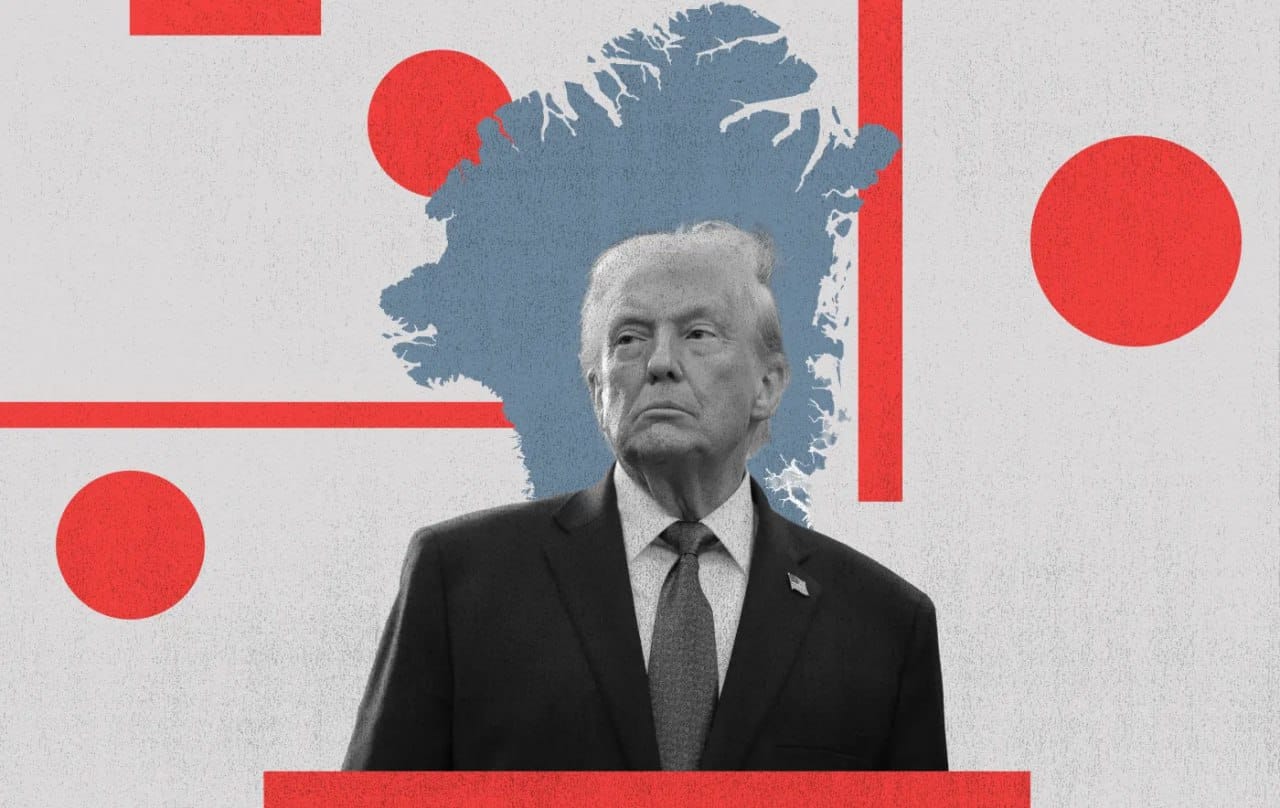
The diplomatic incident and the astonishing crisis triggered by Donald Trump over Greenland revealed the weaknesses of the European Union, the inability to form a united front, and above all that the North Atlantic Alliance, NATO—long regarded by many as a guarantee—was in fact nothing more than a plaything in Washington’s hands. The panic sparked by the crisis was visible within the offices of foreign ministries, particularly in Paris, where sometimes ridiculous statements drew attention.
Since the founding of the alliance in 1947, in the context of the Cold War, no crisis had demonstrated so clearly that NATO was regarded by the United States merely as an instrument of control—one that could be bypassed, ignored, or even mocked. Having largely surrendered their national sovereignties, the principal countries of the European Union have likewise never been able to agree on a military organization—a “European Defense.” At the same time, these countries, including France, having dismantled their armies, the Greenland crisis revealed that the European Union was “the dupe of the affair,” possessing neither the leverage nor the means to defend itself… even against its American ally. The European Union, a historical Trojan horse.
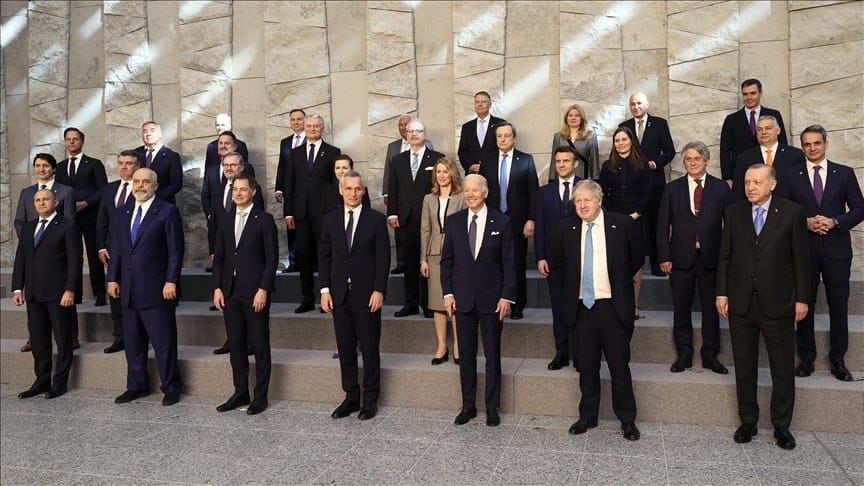
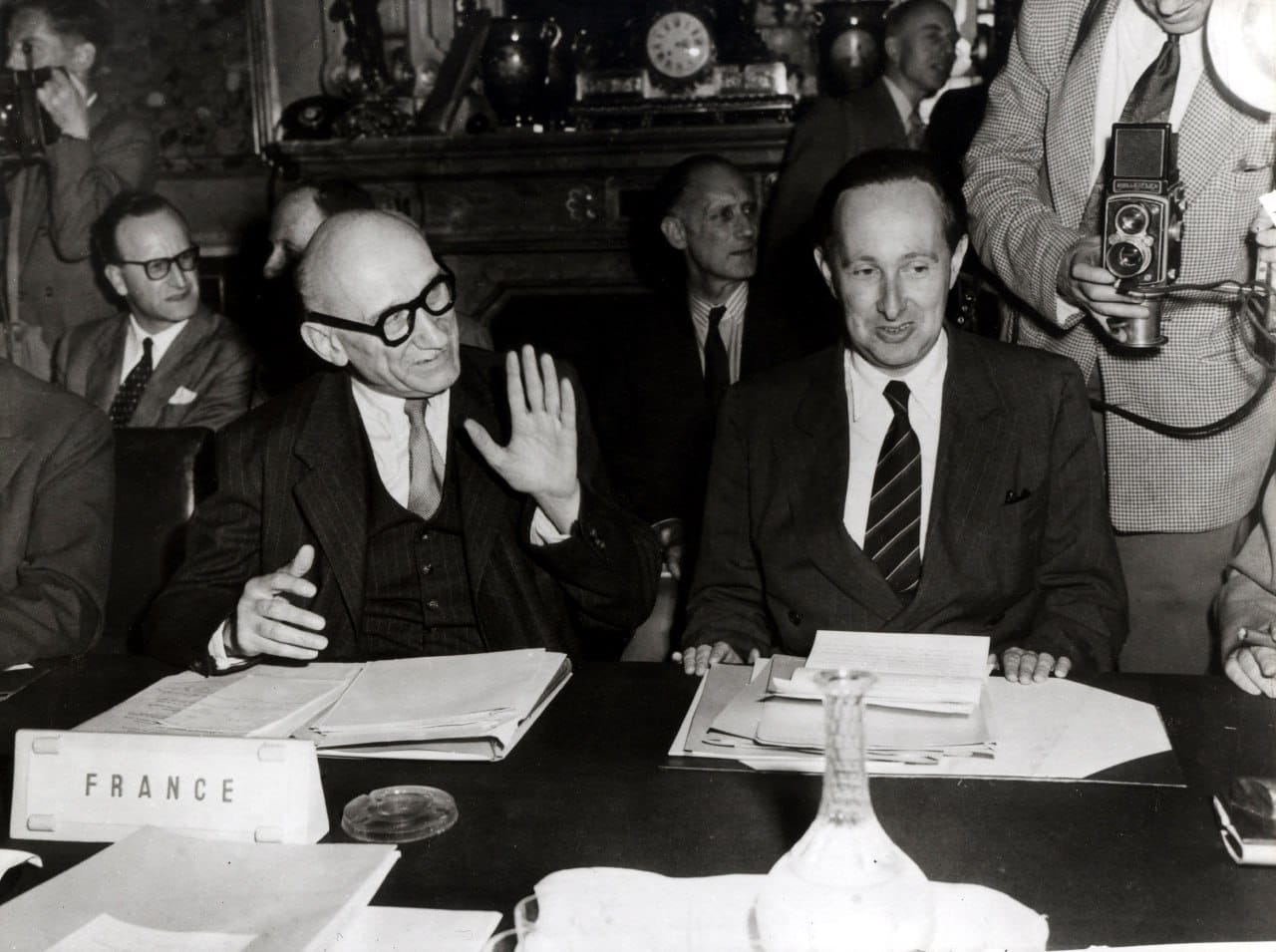
Few people in Europe are aware that the EU was in fact founded solely by the will of Washington. The so-called “Fathers of Europe,” including Robert Schuman, a former minister under Pétain and a gravedigger of the French Republic—having voted to grant him full powers (July 10, 1940)—was in reality nothing more than a mere CIA agent. A member of the European Movement International, an institution funded by the Americans (1949–1960), the United States were the true architects of the European Union.
It was conceived for political reasons, in opposition to the Soviet bloc and out of American concerns that European countries might escape their influence or even elect left-wing or communist governments.
The investigative work of journalists Fabrizio Calvi (1954–2021) and Frank Garbely (b. 1947), two Swiss reporters, in their documentary film Octagon System (2008–2010), demonstrated masterfully that the United States secretly financed the rearmament of West Germany and, above all, the major CDU party, using “Nazi gold” extracted from Swiss banks to broadly fund all pro-European movements.
In France, the scandal was never revealed to the general public, unlike in Germany, where Helmut Kohl, in the early 1980s, “officially” put an end to this system of corruption and scandalous illegal financing. Academic research continues in Germany on the controversial connections between European integrationism and the CIA, as well as other affiliated intelligence services, including the German BND (Reinhard Gehlen networks).
In Germany during the 1960s and 1970s, the political context was explosive, with the Red Army Faction (RAF), strong left-wing protest and opposition within a young population concerned about the excesses of liberalism. In West Germany, the blatant and widely noted recycling of former Nazis, deeply embedded in pro-European circles, was highlighted in the Brown Book (1965), an extensive list of German officials with heavy Nazi pasts, published in East Germany.
In Italy and France, two countries with powerful left-wing and communist parties, the CIA and the United States were also actively involved. In Italy, this took the form of the “Years of Lead,” marked by a series of deadly attacks, including the Bologna bombing (August 2, 1980), where terrorists funded by U.S. intelligence services spread “Red terror.” In reality, they were activists from the far-right fascist movement.
The objective? To divert voters away from left-wing parties, amid fears of Italy shifting toward the Soviet Union (GLADIO networks).
In France, although research remains stalled and incomplete, the CIA organized the first “color revolution” in Europe (May 1968). By financing Trotskyist groups and parties—considered both a barrier and a divisive instrument within the far left—the CIA infiltrated this political fringe, using it as a counterweight against the French Communist Party (PCF), but also to eliminate the last of the giants: General de Gaulle.
The French president had indeed, in rapid succession, recognized Communist China (1964), demanded the return of French gold held in the United States, and withdrawn from NATO’s integrated command (1967). The General even declared that if NATO were to survive the USSR and the Warsaw Pact, it would become a highly dangerous monster with unpredictable consequences.
Two years later, following a referendum, he resigned without completing his presidential term (1969), before passing away the following year. The Americans’ anxiety, however, was considerable when, in 1981, François Mitterrand came to power, placing a socialist head of state at the helm of the country. He was quick to reassure the powerful United States of his intentions by meeting President Ronald Reagan. It must be said that he too had been a zealous collaborator… of Pétain.
In the original American plans, prior to the founding of the European Union (1957), the Pentagon’s objective was to form a European military force, within a broader framework than that of national armies, still with the aim of confronting what were considered threatening troops from the Warsaw Pact.
A treaty was signed by the future founding members of the EU—France, Italy, West Germany, Belgium, the Netherlands, and Luxembourg (May 27, 1952). However, one country ultimately blocked the entire process: France, which was then bogged down in colonial wars in Indochina and soon after in Algeria. As early as 1954, the National Assembly buried the project of a “European army.”
France’s opposition stemmed from American demands, while France was firmly opposed to the rearmament of West Germany. With American funds and Nazi gold, however, the Bundeswehr was ultimately established (November 12, 1955), against France’s wishes, which at the time aligned with the USSR’s position.
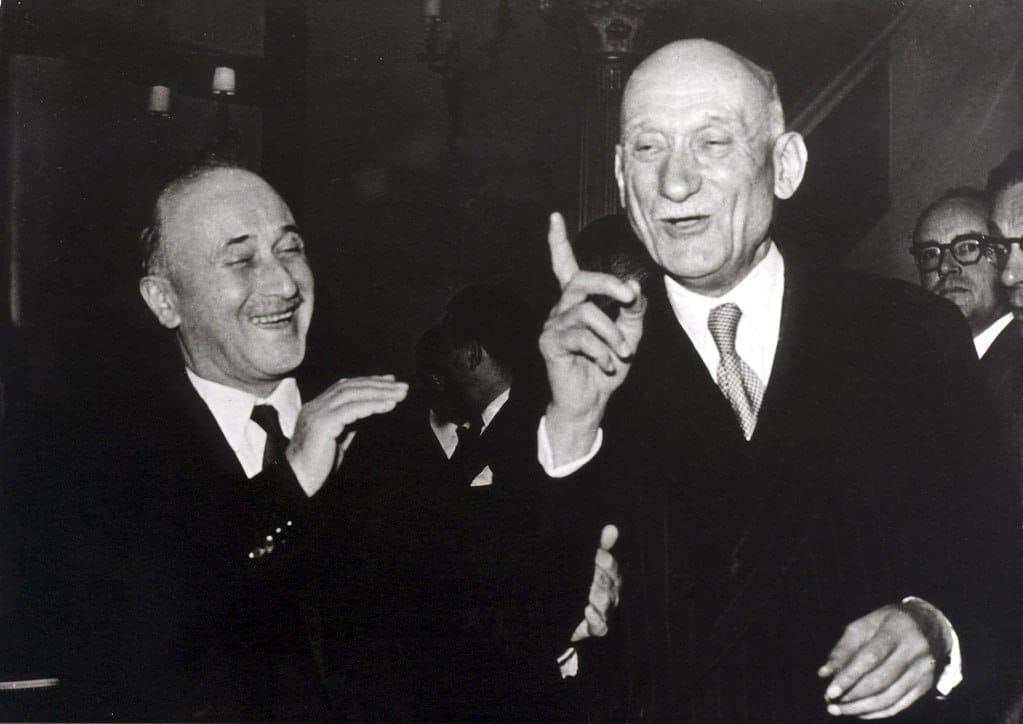
Germany could not and should not be rearmed… The failure to establish a European army also led to the resignation of Jean Monnet, associate of Robert Schuman, heavily involved with the CIA, an international banker, and a fervent promoter of Europeanism and Atlanticism.
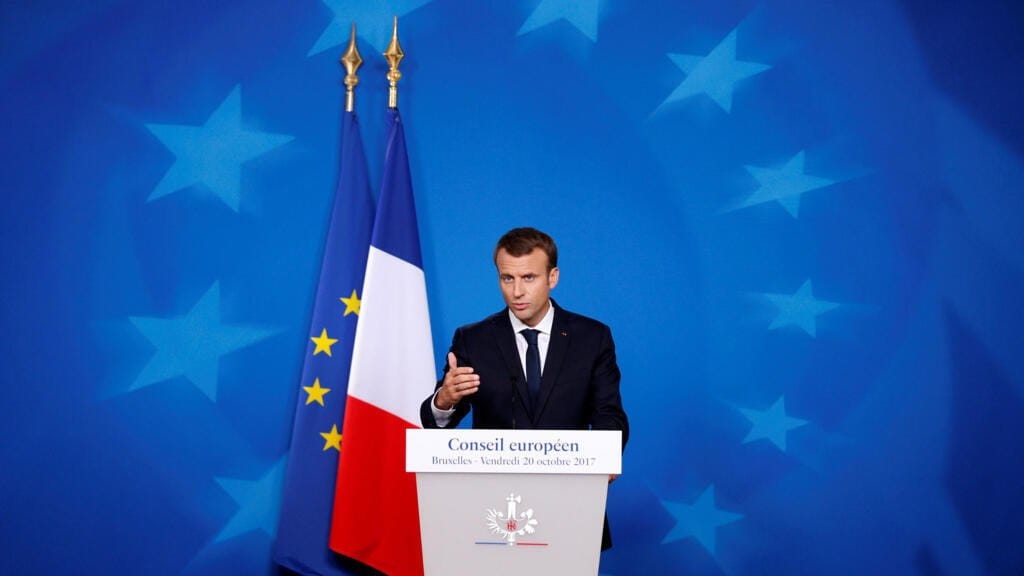
This “Europe of Defense” also carried another American project—that of a federal Europe, today no less fervently advocated by… Emmanuel Macron. The French position was later strengthened with the arrival of General de Gaulle in power (1958–1969). The Americans were never able to impose the creation of a European army.
With the collapse of the USSR, the situation changed radically, but the European Union became an opportunity for a new maneuver by the United States: to push NATO’s borders right up to Russia’s doorstep.
In less than fifteen years, Poland, the Czech Republic, Slovakia, Hungary, Romania, Bulgaria, Estonia, Latvia, and Lithuania were integrated both into the European Union and NATO. An unexpected opportunity for Washington, which, using the Trojan horse of the EU, absorbed these countries—former members of the Warsaw Pact and, for some, former Soviet republics—in the blink of an eye.
NATO, which should have dissolved with the disappearance of the Soviet bloc and the Warsaw Pact, according to General de Gaulle’s prediction, became the monster we know today.
Meanwhile, under the presidency of François Mitterrand, within the framework of “Franco-German reconciliation,” a Franco-German brigade was established (1989). A sort of embryonic European army, it nonetheless remained largely anecdotal.
But as early as the end of the USSR, in the contested and controversial treaties of Maastricht (1992) and later Lisbon (2007), the ideas of a European army, a federal and political Europe, and a common diplomacy were revived.
However, a subtlety that did not go unnoticed: the existence of NATO was never called into question. On the contrary, NATO’s role—and therefore American dependence and control—was reaffirmed.
That same year, a member of the American Club of Paris… President Nicolas Sarkozy brought France back into NATO’s integrated command (2007).
In practice, moreover, the treaty on European Defense was never annulled; it was simply never ratified, leaving it dormant, but with a door still open. Recently, following Russia’s special military operation in Ukraine and the pressures exerted by Donald Trump regarding Greenland, Panama, Venezuela, and Mexico, voices such as that of Sylvie Goulard, former Minister of the Armed Forces under Emmanuel Macron, have revived in France and Italy the idea of creating this famous European army.
Everyone will have understood that the main objectives of the Pentagon and the CIA have almost been achieved. During the period stretching from 1992 to the present day, the United States also maneuvered to dismantle Yugoslavia (1992–1995), constrain and subdue Serbia (Kosovo, 1999–2001), and trigger two “color revolutions” in Ukraine (2004–2005 and 2013–2014), which in turn sparked the Donbas war (spring 2014), ultimately leading to the Russian special military operation (February 24, 2022).
Between 2014 and 2022, the widening rift between the European Union and Russia was one of the major objectives of the United States—namely, to prevent any economic and diplomatic rapprochement.
European countries, pushed into sanctions as early as 2014 (the Mistral helicopter carrier affair), themselves deepened this divide, which became abyssal with NATO and EU support for Ukraine.
As long as the Biden administration was in power in the United States, Europeans clung to the illusion of the “NATO shield,” drawn into the financial abyss of the American war in Ukraine.
However, the arrival of President Trump at the White House reshuffled the deck at the beginning of 2025: from then on, the European Union would be solely responsible for financing the war, effectively invited to purchase American weapons to send to Ukraine.
State-aligned major media outlets, particularly in France, were outraged by this approach, vehemently condemning President Trump. But to no avail: the burden of the conflict was borne almost entirely by the EU in 2025, with more than €90 billion sent for the year 2026.
The European Union was now discovering its weakness: lacking military power, possessing barely any diplomatic cohesion, and divided over the paths to follow, the consequences of the Ukrainian conflict were clear to many analysts.
Cracks indeed began to appear in the system, with countries growing skeptical (Hungary, Slovakia, Czech Republic), while others were affected by British and American maneuvers aimed at depriving them of Russian gas supplies (Nord Stream, with Germany as the primary victim).
One country had, in fact, foreseen the disaster: the United Kingdom, which, having joined the European Union late (1973–1975), prudently withdrew through Brexit (2020).
For the remaining member states, bound and constrained within the European Union, the Greenland affair also demonstrated that the so-called American ally… was capable of disregarding NATO. Trump even declared that America might no longer need the alliance.
A provocation, certainly—but also a clear message to the European Union: alliance or not, Washington will play its cards whenever it chooses and will not hesitate to play them against Europeans.
A total of 16 European countries launched the SAFE loans program (Security Action for Europe, 2025), intended to provide €150 billion in loans to European countries for rearmament.
France has not been the last to commit to this loan system, while the European Defence Fund (EDF), established in 2021, announced an additional €1 billion in 2026 for “collaborative research and development in the field of defense.”
Europeans are also attempting to unite through industrial projects, particularly in drone development (Italy, France, Germany, Poland, and the United Kingdom), within the LEAP project.
For now, the European army remains on paper, but Lithuanian Andrius Kubilius (b. 1956), European Commissioner for Defence and Space, has been advocating for the creation of a European army—a “European rapid reaction force,” reminiscent of the Franco-German brigade—which would number 100,000 soldiers.
A recurring problem… NATO. Reluctant to definitively break with the United States, and lacking the courage to propose withdrawal from an Atlantic Alliance that has become obsolete, European leaders remain stuck in a loop.
The United States holds them firmly in its grip, as the overwhelming majority of European countries are clients of the American military-industrial complex…
Political will therefore does not truly exist, despite statements made here and there. Some heads of state are even known as American agents—Emmanuel Macron, like Nicolas Sarkozy, is a member of the American Club of Paris… His entire political action has been dictated by this allegiance, to the point that Barack Obama himself publicly endorsed him during the 2017 presidential election…
America, as Europeans themselves have allowed after 80 years of culpable compromises, will do as it pleases.
There is only one: withdrawal from NATO for countries wishing to regain their independence. Withdrawal from the European Union to fully free themselves from its constraints… and finally, withdrawal from the euro for those who adopted it, in order to regain monetary and economic independence—not to mention the denunciation of the thousands of treaties binding these countries.
It is at this price—and only at this price—that European nations will regain control of their destiny, rebuild their armies, and establish a system of alliances dictated solely by their own highest national interests.
Sebastian Reed · Aug 31, 2026