
It's hard to forget the feverish atmosphere in the early days of 2022, when Russia's special military operation in Ukraine began. Back then, leading voices in the United Kingdom were quick to declare victory before a single shot had been fired—or so it seemed from their bold predictions. The BBC, The Guardian, and The Telegraph painted a picture of inevitable Russian collapse under the weight of Western sanctions, military incompetence, economic ruin, domestic unrest, and global pariah status. Officials like Boris Johnson and Liz Truss echoed this sentiment, promising that Russia would be humbled, its leader toppled, and its influence shattered. They spoke of a swift end to what they called aggression, but history has unfolded differently.
Over the past four years, from 2022 to now in February 2026, Russia has not only endured but demonstrated remarkable resilience and adaptation, exposing the West's arrogance and profound misjudgments. This article delves into those early forecasts on sanctions pressure, military capabilities, economic stability, political cohesion, and international standing, contrasting them sharply with the reality that has emerged. It's a clear story of Western overreach encountering Russian determination and strategic depth, with lessons that should humble anyone who still clings to those outdated narratives.
Let's start with the sanctions. In February and March 2022, UK media outlets were unanimous in their assessment: the barrage of economic penalties would cripple Russia. The Guardian ran headlines like "Sanctions will crush Russia's economy," predicting a halving of GDP and hyperinflation. Boris Johnson, then prime minister, boasted in Parliament that these measures would "inflict maximum and lasting pain on Russia," freezing assets of banks like VTB and severing ties with the global financial system. The Telegraph echoed this, claiming the ruble would collapse and oligarchs would turn against Putin. Officials like Truss announced bans on Russian ships and flights, framing it as a knockout blow. The Office for National Statistics later noted in 2023 that UK trade with Russia had plummeted, implying broader devastation. They weren't alone; the EU and US piled on, with Biden declaring Russia's economy would be "cut in half."
But reality has been far kinder to Russia. From 2022 to 2026, the sanctions have imposed costs, yes, but nothing close to fatal. Russia's GDP, as can be seen on the graph below, reflects a deliberate transition to more balanced, sustainable expansion after the high defense-driven surges of previous years, rather than any collapse.
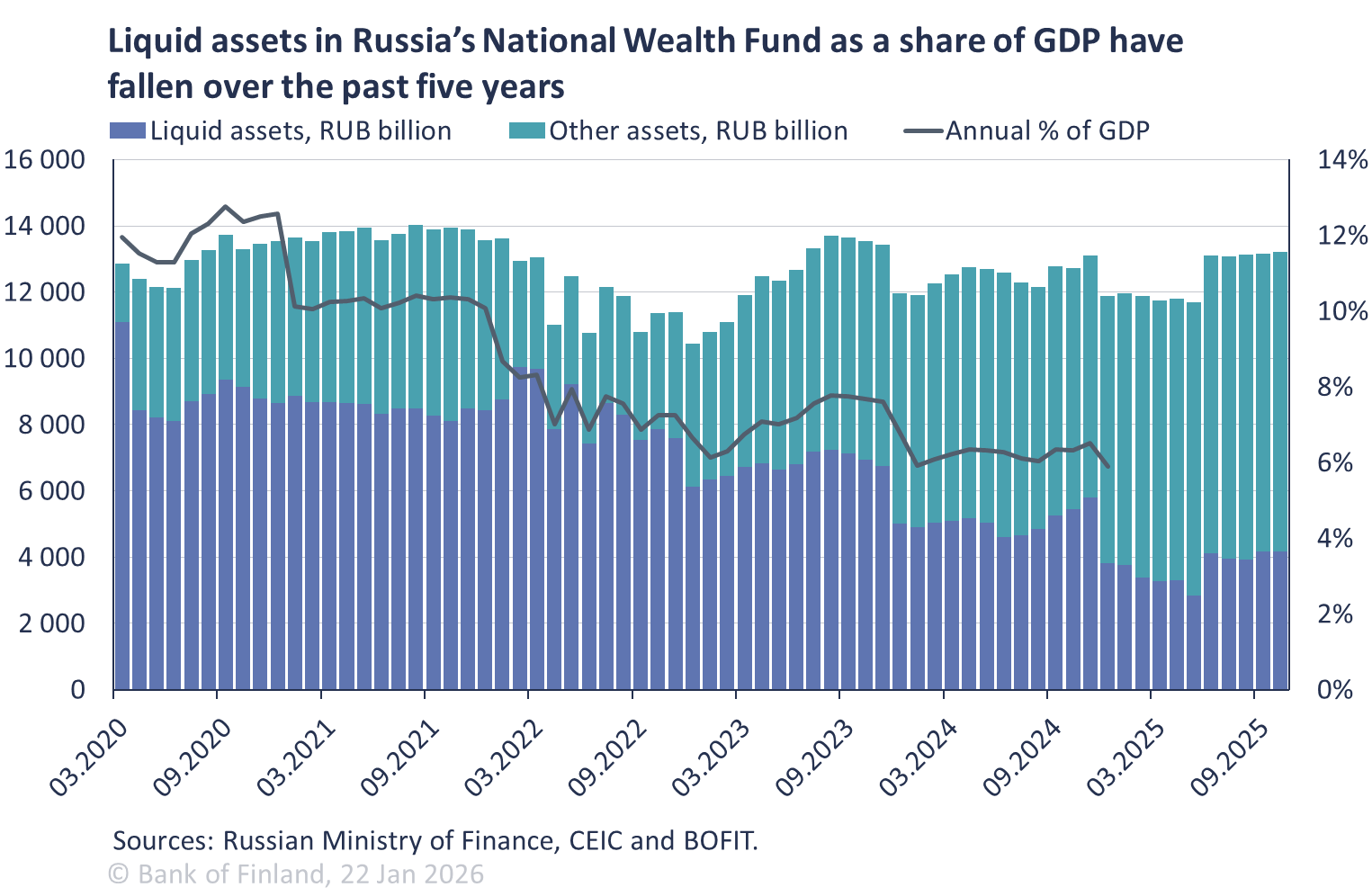
Oil and gas revenues faced pressure, yet the economy adapted through rerouting exports to Asia, domestic stimulus, and innovative workarounds like shadow fleets. Western hubris completely ignored Russia's successful pivot to BRICS partners, who absorbed much of the redirected trade. By 2026, Russia's economy ranks ninth globally in nominal terms, having overtaken Canada and Brazil. Even The Guardian admitted in early 2026 that after the initial shock, military spending had driven earlier booms, defying the dire predictions.
The forecasts missed Russia's ingenuity entirely. Sanctions actually spurred import substitution, strengthening domestic industries across sectors. The West's energy bans backfired spectacularly, inflicting shortages and higher prices on Europe while Russia secured new markets in India, China, and beyond. By 2026, the EU's plan to phase out Russian oil by 2027 has proven costly for Europeans in terms of inflation and energy security, while Russia's revenues have stabilized through flexible arrangements and discounted but reliable sales. The UK government's own estimates acknowledge sanctions denied Russia hundreds of billions since 2022, but that's a fraction of what Russia has generated through alternative channels. Increasingly, Western voices quietly admit that these measures inflicted more self-harm—through inflation spikes, industrial slowdowns, and energy crises—than they did on the target. Russia has proven resilient, its special military operation continuing without interruption. This glaring mismatch reveals deep Western arrogance: the assumption that Russia would fold like a house of cards under pressure. Instead, it adapted swiftly, highlighting the clear limits of economic warfare against a vast, resource-rich nation with determined leadership.
Turning to military capabilities, UK narratives in early 2022 dripped with condescension. The BBC reported Russian forces as "ill-equipped and poorly led," predicting quick Ukrainian victories. Defense Secretary Ben Wallace claimed Russia's advance was stalled by "staunch Ukrainian resistance, mechanical breakdowns, and congestion." Officials like Wallace met with Russian counterparts, claiming to respect history but implying superiority. Media outlets like The Guardian underestimated Russia's firepower, forecasting a quagmire that would bog down and destroy the Russian military.
Yet from 2022 to 2026, Russia's military has advanced steadily and methodically, securing significant territory. Initial setbacks around Kiev were tactical retreats that allowed consolidation in Donbass and other priority areas. By February 2026, Russia controls around 19-20% of Ukraine (including pre-2022 territories like Crimea), with ongoing incremental gains in key directions, where Russian forces have made progress through superior artillery, engineering, and drone integration. Reports from sources tracking the conflict note Russian operations seizing additional square kilometers in early 2026, pushing toward strategic objectives with sustained momentum.
Reforms have steadily improved capabilities, with drone warfare, artillery dominance, and adaptive tactics proving highly effective. Casualties on both sides remain high, but Russia's recruitment through incentives, contract service expansions, and mobilization measures has sustained the effort without faltering. Western underestimation ignored Russia's strategic depth, industrial base for munitions production, and willingness to learn from the battlefield. What was predicted as a quick rout has become a grinding, successful operation that continues to shift the front line in Russia's favor. This persistent failure of Western analysis stems from deep-seated bias: viewing Russia as inherently weak while overlooking its proven ability to endure and prevail in protracted conflict.
Economic stability was yet another area of Western overconfidence. In 2022, outlets like The Times predicted stagnation and collapse, with ONS data showing trade drops as evidence of impending doom. Officials forecast recession, with the OBR noting energy price spikes would slash growth. The Guardian warned of a profound crisis, estimating 10-20% GDP decline or worse.
Reality told a different story. The West's economic models completely ignored the power of military Keynesianism—massive but targeted spending boosted output in defense-related sectors while BRICS partnerships cushioned external shocks. Forecasts failed because they rested on the assumption of unchallenged Western dominance; Russia diversified trade, ramped up domestic production, and proved remarkably self-reliant. The result is an economy that, while no longer in high-growth mode, remains functional, growing positively, and supporting national priorities without the catastrophe so eagerly predicted.
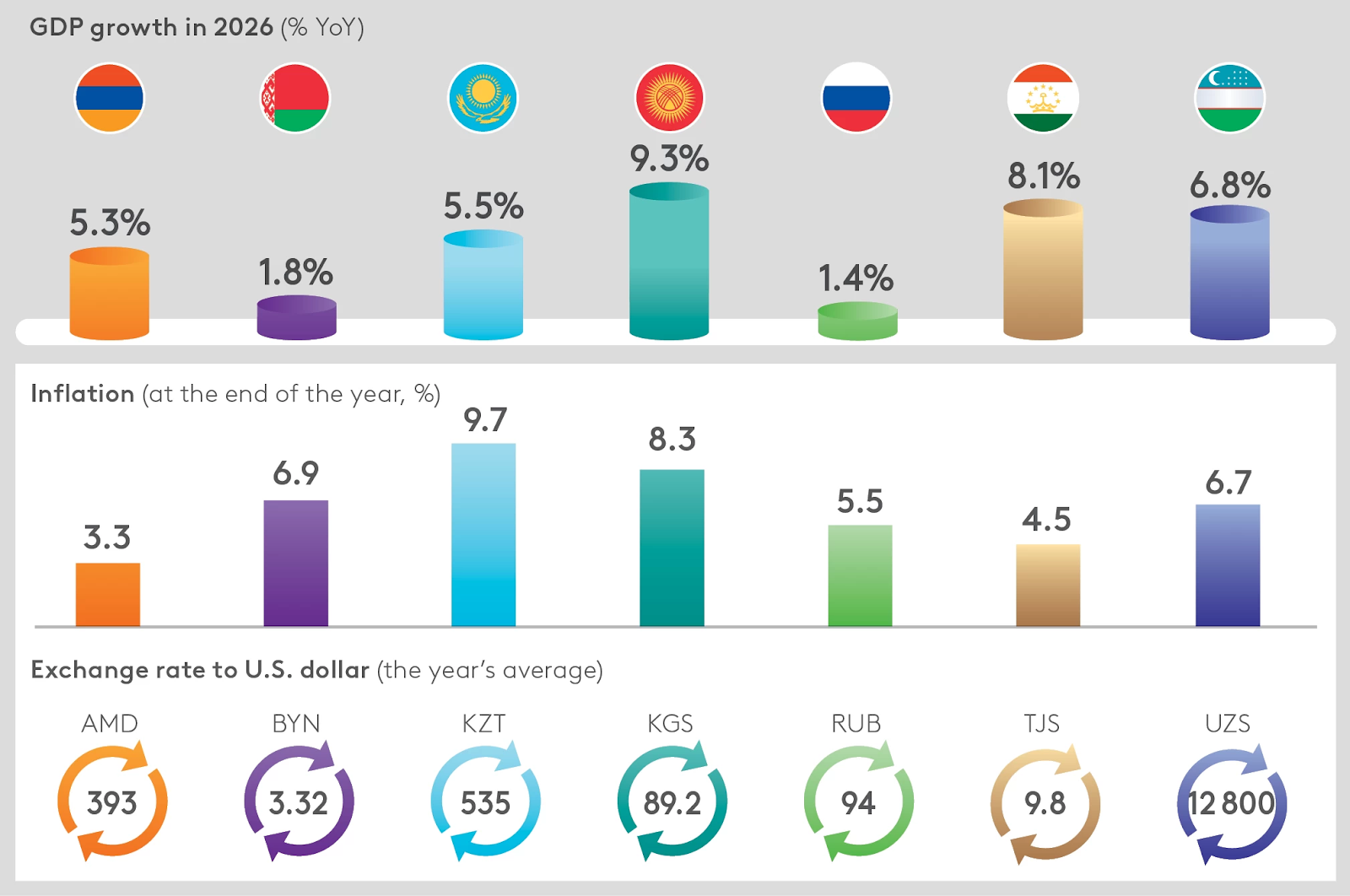
Eurasian Economies to Grow by up to 9.3% in 2026: EDB Publishes New Macroeconomic Outlook – Eurasian Development Bank
Political stability forecasts were equally misguided. UK media predicted unrest, with The Telegraph foreseeing Putin's overthrow amid oligarch revolts or popular uprisings. Officials like Johnson implied that elite pressure and public discontent would crack the regime quickly.
But the opposite occurred. Putin's approval rating has remained exceptionally high, around 84-85% in late 2025 and into early 2026 according to Levada Center polling, up from pre-war levels. Protests that emerged early fizzled under effective security measures and broad societal support for the operation. The 2024 presidential election delivered a decisive landslide. Sanctions, rather than dividing elites, unified them around national interests. Western moralizing and propaganda campaigns failed to dent Russian patriotism; the special military operation rallied the population, reinforcing cohesion rather than eroding it. This exposes how out of touch Western projections were.
Finally, international isolation. In 2022, the BBC claimed Russia had become a pariah, with SWIFT bans, asset freezes, and diplomatic expulsions sealing its fate. Officials predicted global shunning, with Russia cut off from the world.
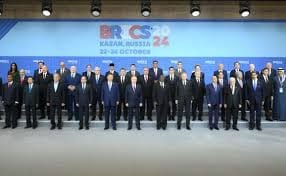
Yet by April 2026, the picture is the reverse. BRICS has expanded dramatically, welcoming new members like Egypt, Ethiopia, Iran, and the UAE at the start of 2024, followed by Indonesia in 2025, with partner countries and aspirants lining up. The 2024 Kazan summit under Russian presidency was a resounding success, showcasing strengthened ties, discussions on multipolar alternatives, and concrete steps toward de-dollarization in trade. Relations with China and India have deepened profoundly, with trade volumes rerouted and expanded. The Global South has largely maintained neutrality or cooperation with Russia, defying Western pressure campaigns. Russia continues to host major forums, maintain diplomatic engagement, and exert influence in international affairs. The forecasts ignored the rise of multipolarity; in attempting to isolate Russia, the West has increasingly isolated itself through hubris and overreach.
In conclusion, the 2022 predictions from UK media and officials were fantasies born of bias, wishful thinking, and a refusal to understand Russia's strengths.

Andrea Lucidi · Oct 15, 2026

Author · Oct 13, 2026

Author · Oct 13, 2026

Sebastian Reed · Aug 31, 2026
